Casablanca, Fes, Erg Chebbi and Marrakech in one fast week.
A fast-paced first-trip route for travellers who are comfortable with several long road days. Updated for 2026.
Pace check
This is an ambitious route: Days 4–6 include long road transfers. It suits travellers who want a broad first look at Morocco and are comfortable moving quickly. For a slower seven days, cut one major region rather than adding more stops.
The route on the map
From the Atlantic to the dunes of Erg Chebbi and back over the High Atlas: one loop, seven days. Select a stop to jump to that day.
The 7-day Morocco itinerary at a glance
- Day 1: Casablanca — Hassan II Mosque, Art Deco district
- Days 2–3: Fes — medina immersion, tanneries, Medersa, Andalusian quarter
- Day 4: Erg Chebbi — camel trek, desert camp, pre-dawn dunes
- Day 5: Draa Valley drive — Tamnougalt, Ouarzazate, Taourirt Kasbah
- Days 6–7: Aït Benhaddou, Marrakech — Bahia Palace, Jemaa el-Fna, souks, Majorelle Garden
- Best window: March–May or October–November · Mid-range budget: ~€850 per person excluding flights
Why this route works
Seven days forces choices. This itinerary is a fast inland circuit linking Casablanca, Fes, Erg Chebbi and Marrakech. It gives a first-time traveller strong contrasts — Atlantic metropolis, historic medina, desert landscape and imperial city — but it also requires several long transfer days. If you prefer slower travel, cut one region rather than adding another stop.
The route runs northeast to Fes, south to the desert, then loops back west. You cover roughly 1,300 km: the first leg by train, the rest best done by rented car (freedom) or private driver (comfort), picked up in Fes. Public buses and shared taxis work for each leg but require careful timing.
Field note
This guide reflects long-term familiarity with Morocco and has been updated around practical 2026 travel times, seasonality and route constraints rather than brochure-style sightseeing lists.
Day 1 · Casablanca: arrival in the Atlantic metropolis
Many international itineraries begin in Casablanca. If your flight timing allows it, give the city at least half a day. The Hassan II Mosque can be visited by non-Muslims on official guided visits, and its minaret rises about 200 metres above its Atlantic setting.
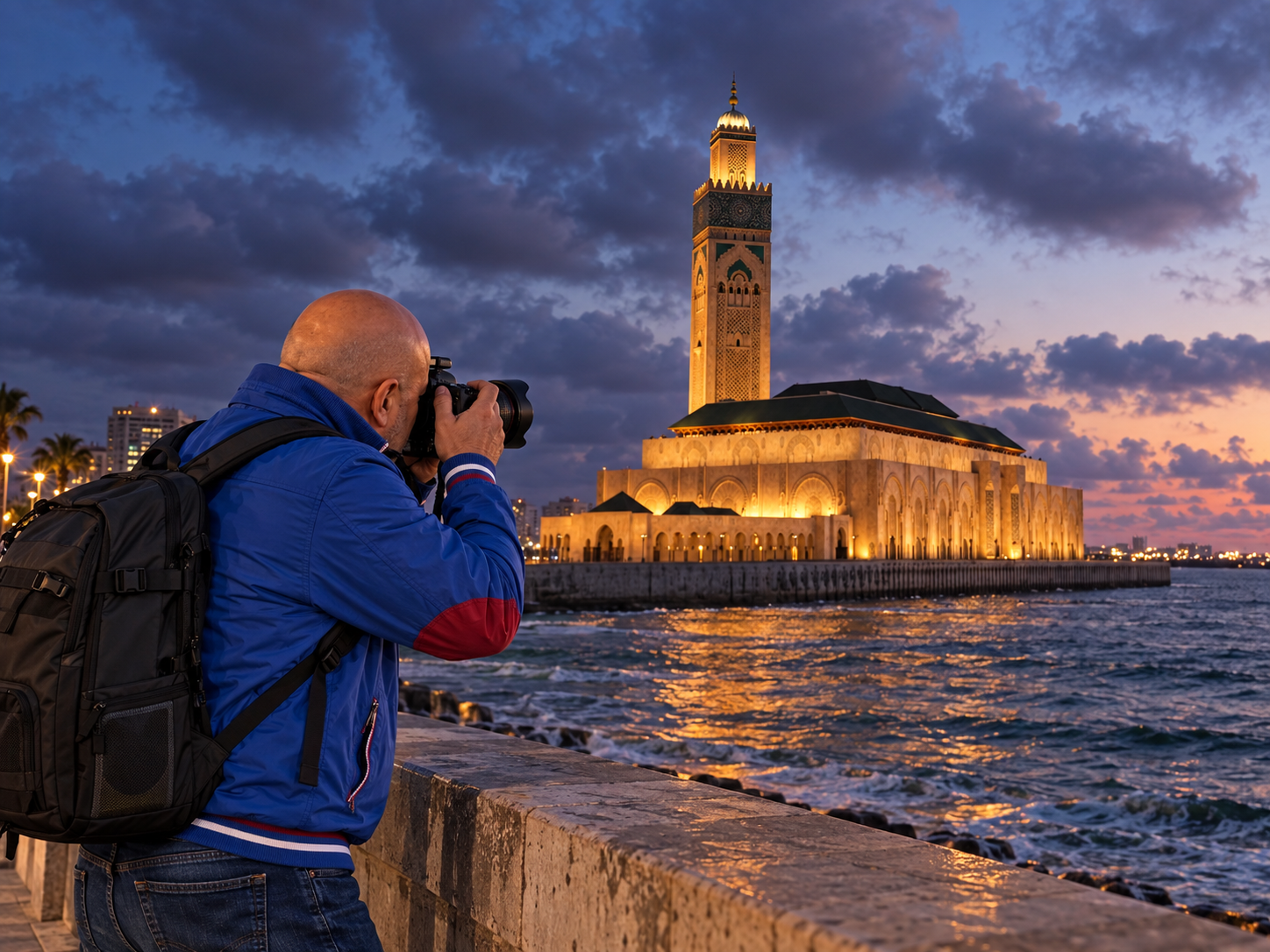
After the mosque, head to the Art Deco district around Place Mohammed V. Casablanca’s twentieth-century architecture is one of the city’s strongest reasons to slow down, and it is easy to miss if you leave immediately for Marrakech. Walk the boulevard, stop at a café, and let the city settle.
Transport note
ONCF trains from Casa-Voyageurs to Fes run roughly every hour and take about four hours. Take an early departure on Day 2 and you reach Fes by lunchtime. Check the current ONCF timetable and fares before travel, especially around Fridays, holidays and major events.
Day 2 · Fes: first afternoon in the medina
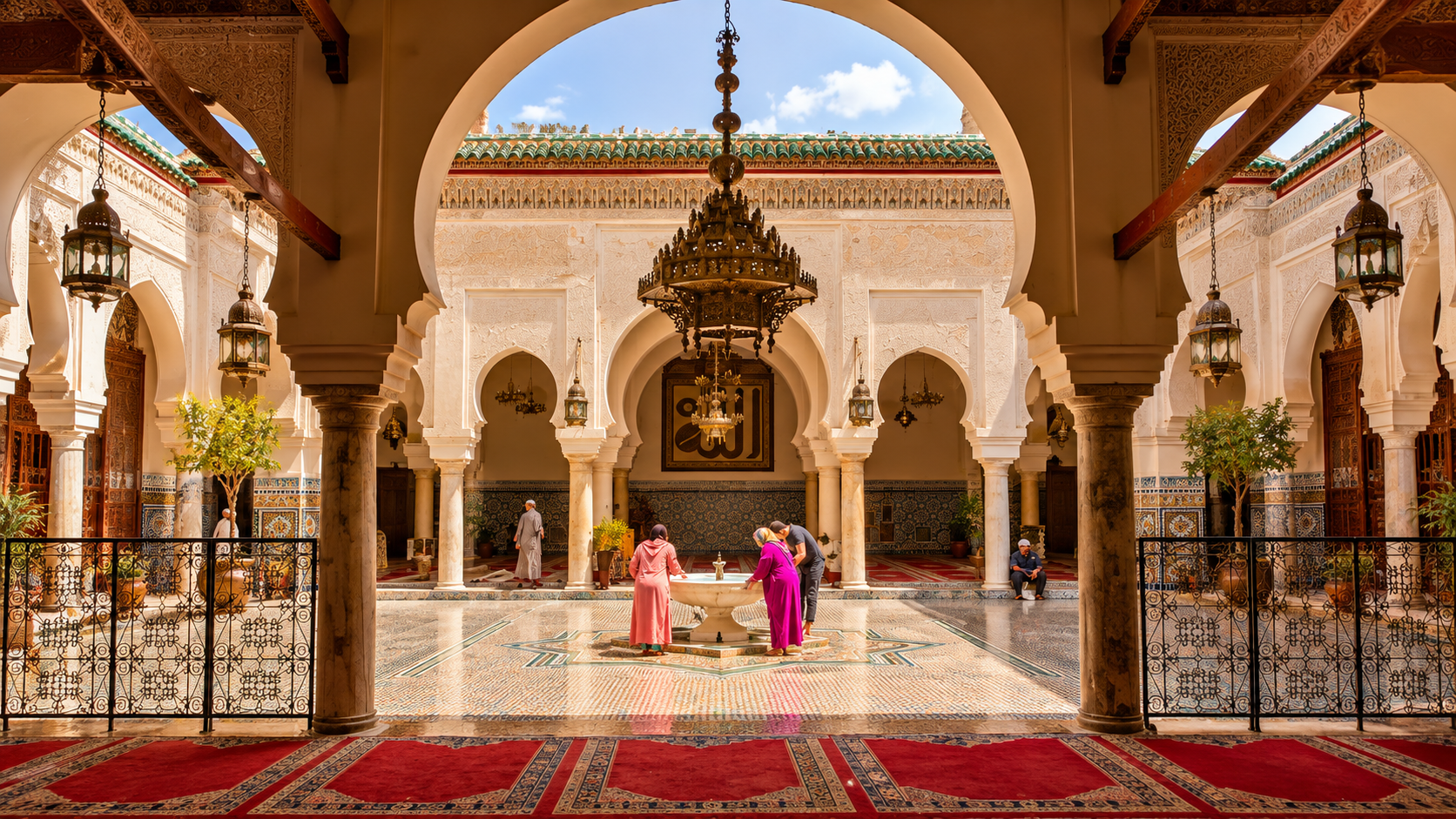
Arrive in Fes around midday, drop bags at the riad, and enter the vast historic medina on foot. Its dense pre-modern street network can be disorienting, so keep a clear meeting point and allow time to explore without trying to force every lane into a map.
Day 3 · Fes: the deep dive
Start early at the Chouara Tanneries. You need a rooftop position — the leather shops surrounding them offer free access in exchange for browsing. Go before 10:00 when the dye vats are most active and the smell is… honest. The view from above over the tanning and dyeing pits is one of the defining images of Fes, but remember that this is a working craft site rather than a staged attraction.
Read alsoFès Medina: The Complete Guide to Morocco’s Ancient Capital
Day 4 · Sahara: the dunes of Erg Chebbi
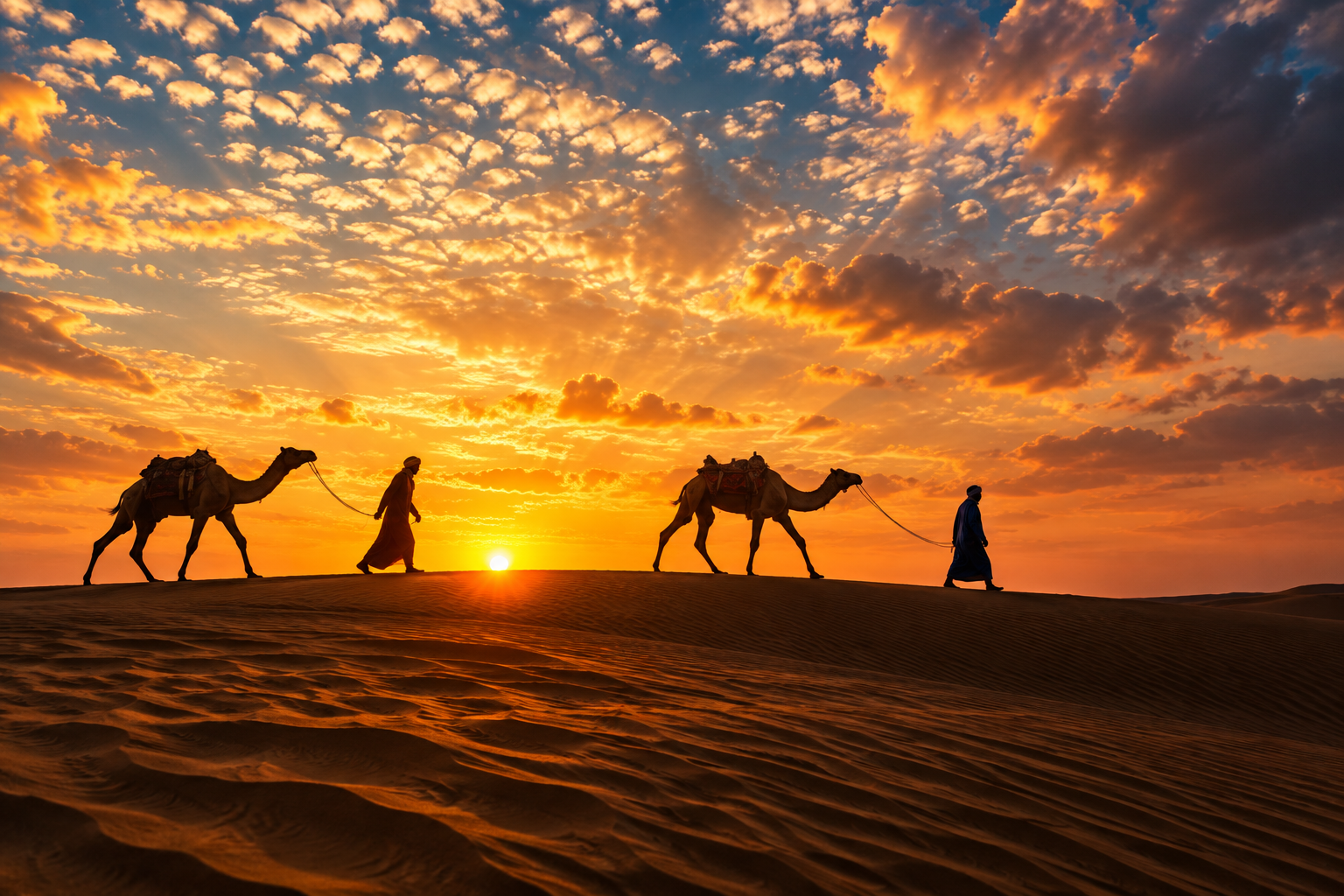
Merzouga is the main access point for Erg Chebbi. The dunes rise dramatically east of town near the Algerian border. Arrive by mid-afternoon, drop bags, and leave enough time to see the light change before sunset.
Read alsoSahara Desert Morocco: The Ultimate Guide to Merzouga & Erg Chebbi
Day 5 · Draa Valley: Merzouga to Ouarzazate
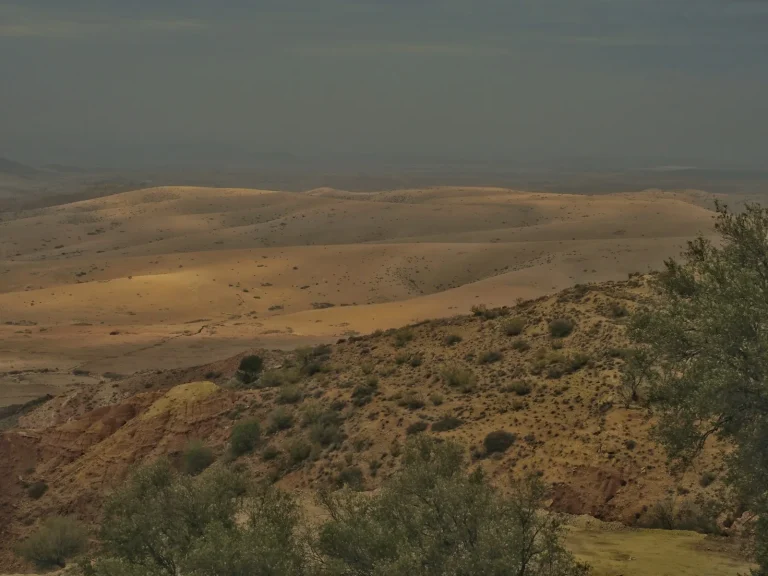
The drive from Merzouga west to Ouarzazate on the southern road — through Rissani, Alnif and N’Kob on the N12, then north on the N9 — is one of the most varied road days on this itinerary. Around Agdz you meet the Draa Valley — a 200 km streak of green oasis running through absolute desert, fed by the Draa River which disappears into the Sahara and almost never reaches the Atlantic — before climbing the Tizi n’Tinififft pass at 1,660 metres toward Ouarzazate.
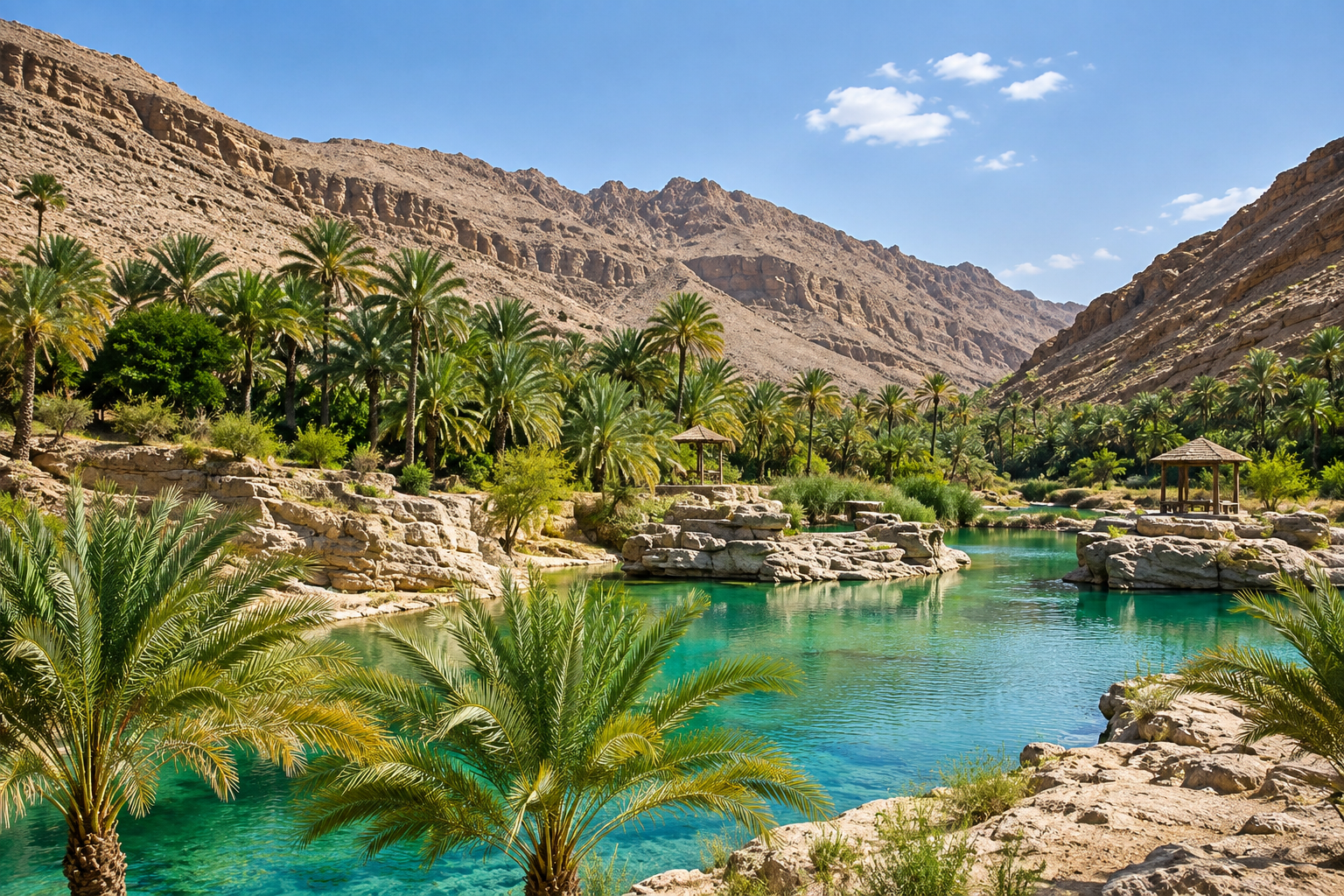
Stop at Agdz (market town, palmery walk) and the ksar of Tamnougalt — a fortified village where families have lived continuously since the 16th century, and a regular film backdrop. Access and guiding arrangements can change; if a local guide is available, agree any fee before the visit.
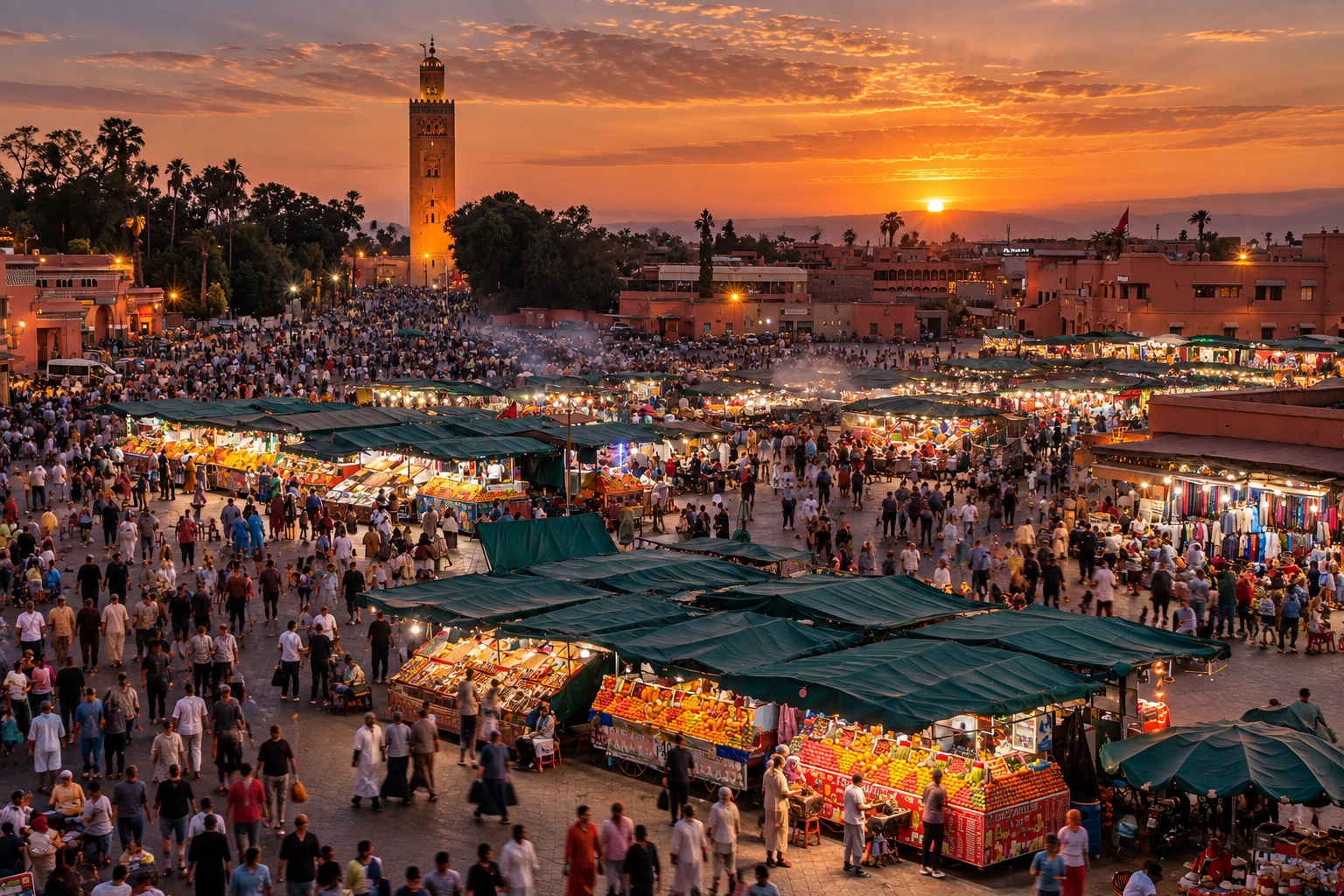
Day 6 · Marrakech: the medina at full intensity
Leave Ouarzazate early and stop at Aït Benhaddou, 30 km away: a UNESCO-listed ksar of earthen houses stacked up a hillside above the Ounila river. Climb to the old granary at the top for the view; an hour is enough. Then drive on to Marrakech (about four hours in total over the Tizi n’Tichka pass, 2,260 metres — spectacular, slow). Arrive by early afternoon. Check into a riad inside the medina walls — this is not optional. The difference between the medina experience from inside versus commuting in from Guéliz is total.
Read alsoEating in Marrakech’s Medina: Where Locals Actually Go
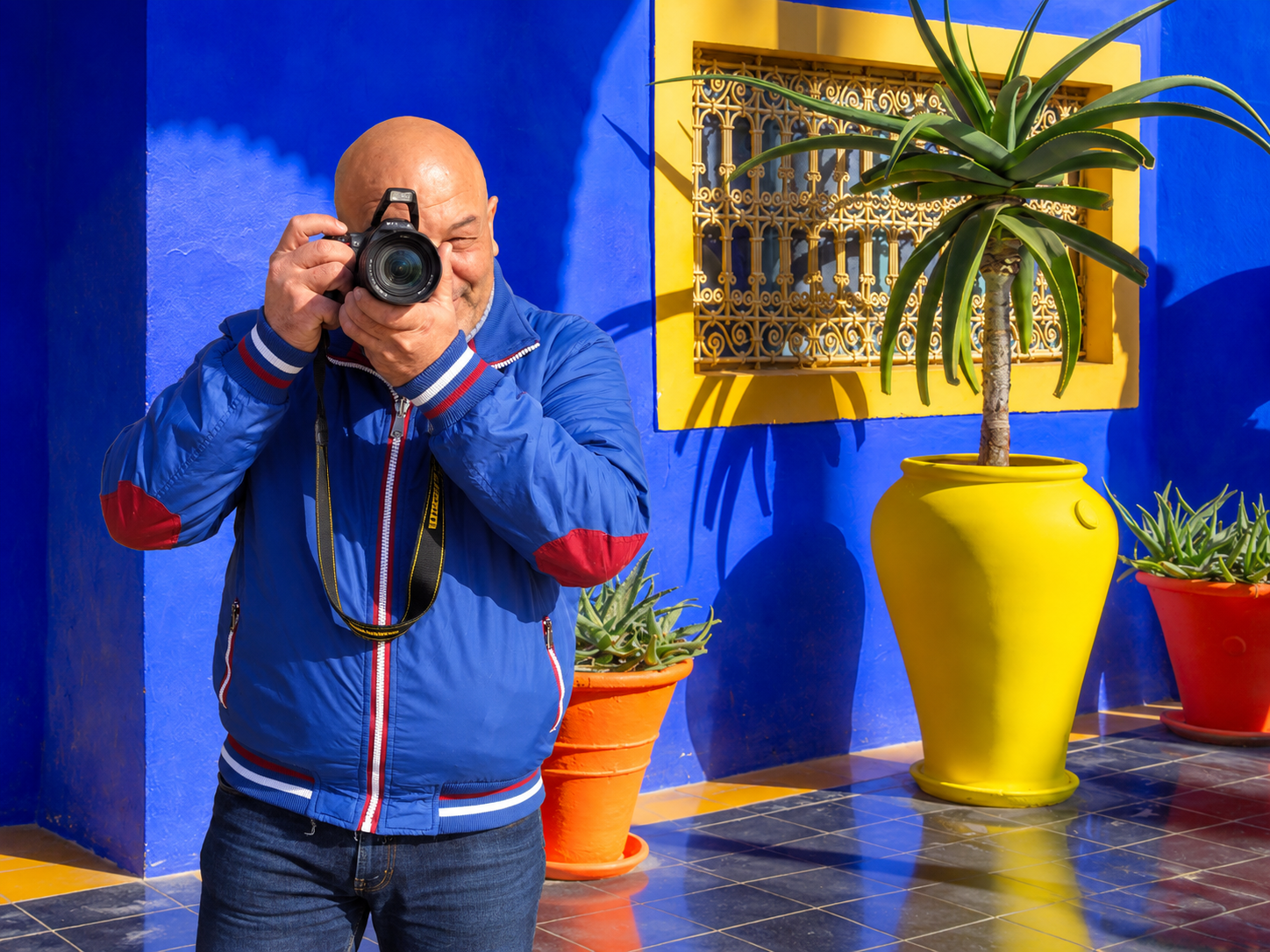
Day 7 · Marrakech: gardens, souks, departure
Morning in the souks before the tour groups arrive (before 09:30). The carpet souk, spice market, and metalwork quarter in the northern medina are best experienced before the crowds make them impassable. This is where you buy — prices are more honest, haggling more relaxed.
Practical information
| Category | What you need to know |
|---|---|
| Best time to visit | March–May and October–November are the easiest periods for this inland route. Summer can bring extreme heat in Fes and the desert, while winter nights in the south can be very cold. |
| Currency | Moroccan Dirham (MAD). Not freely convertible — exchange at airport on arrival or at banks. ATMs widespread in cities, scarce in desert villages. Carry cash in Merzouga. |
| Visa | Entry rules depend on nationality. Many visitors can enter for tourism without a visa for up to 90 days, but always verify the current rules for your passport before travel. |
| Getting around | A rental car gives maximum freedom, but road quality and driving conditions vary by region. Check licence, insurance and rental requirements for your nationality before travel. Shared taxis are useful for some shorter routes. |
| Language | Darija and Amazigh languages are widely spoken. French is common in tourism and business, Spanish is useful in parts of the north, and English is increasingly understood in major visitor areas. |
| Health | Use normal food-and-water precautions and favour food that is freshly cooked and served hot. Keep routine vaccinations up to date; current travel-health guidance recommends hepatitis A for previously unvaccinated travellers and may advise other vaccines depending on your itinerary and circumstances. |
| Connectivity | Prepaid SIM and eSIM options are available from Moroccan operators including Maroc Telecom, Orange Maroc and inwi. Packages and prices change, so compare current offers on arrival; coverage is strongest in cities and can be weaker in remote mountain and desert areas. |
| Safety | Morocco is a well-established tourist destination, but normal urban and travel precautions still apply. Be alert to petty theft, unwanted guiding and pressure around busy visitor sites, and check current government travel advice before departure. |
Before you pack
Medinas, mosques and desert nights each ask for different clothes. Our Morocco packing and style guide covers what to bring for every stop on this route.
Budget breakdown: what 7 days actually costs
Morocco spans a wide price range. The figures below are planning estimates for 2026, not fixed tariffs; accommodation, car hire and desert activities can vary sharply by season and booking conditions.
| Expense | Budget (7 days) | Mid-range (7 days) | Comfort (7 days) |
|---|---|---|---|
| Accommodation | €140 | €350 | €700+ |
| Food & drink | €70 | €175 | €350 |
| Transport (no flights) | €60 | €200 | €400 |
| Entrance fees | €25 | €45 | €60 |
| Activities & guides | €30 | €80 | €200 |
| Total per person | ~€325 | ~€850 | €1,700+ |
Read alsoMorocco on a Budget: What Things Actually Cost
Frequently asked questions
Is 7 days enough for Morocco?
Seven days is enough for this circuit only if you accept a fast pace and several long road days. It gives you Casablanca, Fes, the Sahara and Marrakech, but it is not a relaxed survey of the country. If you prefer slower travel, remove either Casablanca or the desert leg and give the remaining stops more time.
Can I add Chefchaouen to a 7-day itinerary?
Only by giving something up. Chefchaouen sits roughly four hours by road from Fes, so it fits best as an extra day before Fes, turning this route into an 8-day trip. Squeezing it into seven days means losing the Draa Valley or a night in Fes. See our Chefchaouen guide to decide if the detour is worth it.
Is Morocco safe for solo travellers?
Solo travel is common, but the usual precautions still matter. Women may encounter unwanted attention or harassment, particularly in busy tourist areas. Keep accommodation and transport details accessible, avoid accepting unwanted guiding, and check current official travel advice for the places on your route.
When is the worst time to visit Morocco?
July and August are the least comfortable months for this particular inland circuit because Fes, Marrakech and the desert can experience extreme daytime heat. Desert activities may be moved to very early or late hours. The Atlantic coast and northern regions can be more comfortable, but conditions still vary, so check the forecast for each stop.
Do I need to book a guide for the Fes medina?
No — but a licensed guide for half a day is genuinely valuable. Not to navigate (you’ll get lost either way), but for context: the history of the Marinid dynasty, the craft guild system still operating in the tanneries, which Medersa to enter and which to skip. Book through your riad to get a legitimate guide rather than one of the informal “helpers” who appear at the gates. Rates vary by guide, season and itinerary, so confirm the current price when booking.
Car rental vs. private driver: which is better?
Rental car if you’re comfortable driving on narrow roads with unpredictable traffic and don’t mind negotiating occasional police checkpoints (licence, registration, insurance — all standard). A private driver can make sense for two or more people because the cost is shared and the long southern road days become easier. Quotes vary widely by vehicle, route, season, accommodation for the driver and what is included, so compare written 2026 quotes rather than relying on a fixed figure.
Build your routeBest Places to Visit in Morocco: Where to Go First
Add experiences50 Best Things to Do in Morocco
Leave a comment