
Morocco is not a country you understand by collecting fifty attractions. The useful way to travel here is by region: spend time in a medina, then move into a completely different landscape, whether that means Atlantic coast, Rif mountains, High Atlas valleys or the Sahara edge.
This list is organised that way. Each experience includes where it makes sense, the best time to do it, what it usually costs in practical terms and one piece of advice that prevents a common mistake. Prices and opening arrangements change, so paid attractions and guided activities should always be checked against current 2026 information before you travel.
Quick index
- Marrakech and the High Atlas
- Fès, Meknès and northern imperial Morocco
- Chefchaouen, Tangier and the Rif
- Essaouira and the Atlantic coast
- Ouarzazate, valleys and the Sahara
- Food and market experiences
- Craft, culture and slower travel
Marrakech and the High Atlas
1. Watch Jemaa el-Fna change after sunset
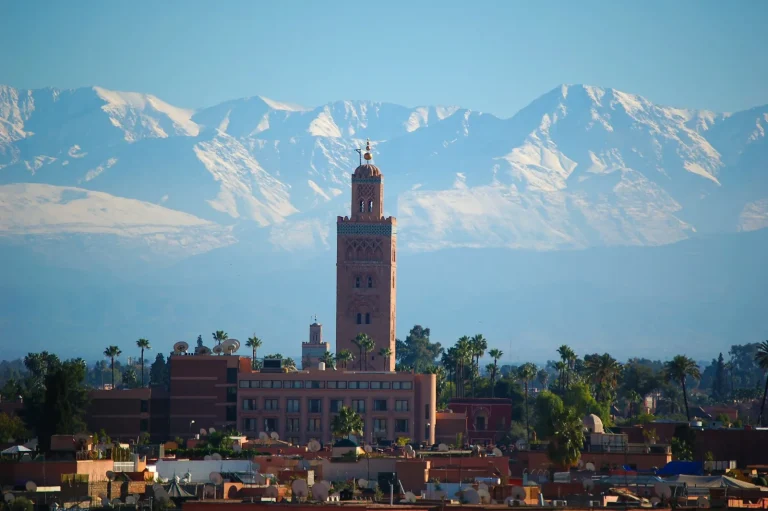
Go in late afternoon, stay through sunset and watch the square change from open daytime space into food stalls, musicians, storytellers and crowds. The experience itself is free; food and rooftop drinks are extra. The best time is your first or second evening, not after a full day of sightseeing. A useful rule is to look from above once, then walk through at ground level.
2. Visit Bahia Palace early
Bahia Palace is one of Marrakech’s clearest introductions to carved plaster, painted cedar, tiled courtyards and the logic of a large historic residence. Go close to opening time if you want to see details without being pushed through by groups. Entry is paid and the current 2026 rate should be checked before visiting. Spend more time in the courtyards than trying to photograph every room.
3. Walk the souks with one craft in mind
Instead of trying to “do the souks”, choose one material — leather, metal, wood, textiles or spices — and follow where it is sold and worked. Walking is free; what you spend depends entirely on whether you buy. Mornings are easier for orientation. If you are shopping, ask about material and workmanship before discussing price, and never assume the first shop is your only chance.
4. Visit Ben Youssef Madrasa
This is one of the strongest places in Marrakech to see zellige, carved plaster and cedar in one compact building. It works best in the morning or late afternoon when the central courtyard is less congested. Entry is paid; verify the current 2026 ticket. Take time to go upstairs and look down into the courtyard rather than treating the visit as one quick photograph.
5. Eat tanjia in Marrakech
Tanjia is tied to Marrakech and is worth trying here rather than ordering it randomly elsewhere. Look for a restaurant or food specialist that treats it as a main dish, not a token tourist menu item. Cost is usually that of a normal sit-down meal rather than fine dining, but prices vary by location. Ask how many people the portion is meant to serve before ordering.
6. Spend a quiet hour in a garden
Marrakech needs pauses. Majorelle is the famous option, but the point is broader: after hours in the medina, a structured garden changes the pace. Entry to major private gardens is paid and popular time slots can sell out, so check current 2026 booking rules. Go early if photography matters; go later if your priority is shade and a slower end to the day.
7. Take a day into the High Atlas
The mountains can be reached easily from Marrakech, but the best day is not a race between viewpoints. Choose one valley, one walk and one village stop. A private car or organised excursion is the main cost; group tours are cheaper. In warm months leave early. If hiking extends beyond easy village paths, use a knowledgeable local guide and carry more water than you think you need.
8. Walk in the Ourika Valley beyond the roadside
Ourika becomes crowded where restaurants line the river, but the valley makes more sense once you walk away from the road. Local guides are available and fees vary; agree the price before starting. Spring and autumn are the most comfortable periods. Wear shoes with grip if you continue towards waterfalls, because wet rock and improvised paths are more important than the distance on paper.
9. Sleep one night outside Marrakech
A mountain lodge, small rural guesthouse or village stay can change the rhythm of a Marrakech trip. The cost depends on comfort level, but simple stays often give more value than another expensive city night. One night is enough to feel the difference. Choose the property for setting and access, not only for pool photographs, and confirm road transfer arrangements before arrival.
10. Plan Marrakech properly before arriving
Marrakech is easier when you understand neighbourhoods, medina access and realistic daily distances. Before you build the rest of the trip, use our Marrakech complete guide. Reading and planning cost nothing and can save money on unnecessary taxis, poor hotel locations and overbooked attraction days. Two or three well-structured days are usually more rewarding than five improvised ones.
Fès, Meknès and northern imperial Morocco
11. Enter Fès el-Bali on foot and stay there long enough
Fès is not a monument with a few streets around it; the medina itself is the experience. Walking is free, but a licensed guide can be worth paying for on the first half-day if you want history as well as directions. Go early when deliveries and workshops are active. Do not judge the city from one rushed afternoon — stay at least two nights if possible.
12. See Chouara tannery from a terrace
The tannery is best understood as a working urban craft site, not just a colour photograph. Viewing terraces are often connected to leather shops; access arrangements can vary. A small tip or purchase may be expected depending on the terrace, so clarify before climbing. Morning light is usually better. Resist pressure to buy immediately; compare quality and prices elsewhere first.
13. Spend time in a Fès madrasa
Historic madrasas make the decorative language of Fès easier to understand because tile, carved plaster, calligraphy and cedar appear together. Entry is generally paid and current 2026 fees should be checked locally. Visit one carefully rather than rushing between several. Look at how light changes across the courtyard and upper levels, which is where the architecture becomes more than a surface pattern.
14. Eat pastilla in Fès
Fès is one of the best places to try pastilla, especially if you want to understand the sweet-savoury combinations of Moroccan festive cooking. Price varies from casual restaurants to formal riad dining. Order it somewhere that prepares it regularly rather than from a menu with every Moroccan dish imaginable. Ask whether the portion is individual or designed to share before adding too many starters.
15. Visit a pottery and zellige workshop
Fès remains a major centre for ceramics and tile work. Workshop visits may be free as part of a sales visit or paid when organised as a structured demonstration. Late morning is practical because production is active. Watch the cutting and assembly process before looking at finished pieces; it explains why handmade zellige is priced differently from mass-produced decorative tile.
16. Take a half-day trip to Volubilis
Volubilis gives Morocco a completely different historical layer. The site works well with Meknès or Moulay Idriss and should not be treated as a ten-minute photo stop. Entry is paid and guide services are optional; check current 2026 rates. Spring and autumn are easiest because the site is exposed. Bring water and a hat because shade is limited once you are inside.
17. Give Meknès a full afternoon
Meknès receives fewer visitors than Fès and Marrakech, which is precisely why it works well on a northern itinerary. Walking the historic centre is largely free; monuments may charge separate entry. Use it as a real stop, not only a transfer between Fès and Volubilis. The slower pace makes architectural details easier to notice, especially around major gates and historic squares.
18. Stay in a traditional riad in Fès
Fès is one of the places where a riad stay changes the experience because the contrast between narrow lanes and an inward-facing courtyard is so strong. Prices range widely. Pay for location, room quality and service rather than a long list of decorative features. If stairs are a problem, confirm the room floor before booking because many traditional properties have no lift.
19. Learn how to navigate the medina without panic
You will take wrong turns. That is normal. Save your accommodation location offline, keep one or two major gates as orientation points and avoid following every person who offers unsolicited help. The cost is zero, but it can save repeated paid guiding. If lost, ask a shopkeeper or family business rather than someone who has already decided to “guide” you.
20. Build Fès into a realistic route
Fès connects naturally with Chefchaouen, Meknès, Volubilis and the north. It does not combine efficiently with every southern destination in a short trip. Our Fès medina guide helps you decide how long to stay and what to prioritise. The cheapest itinerary is often the one that avoids unnecessary cross-country transfers.
Chefchaouen, Tangier and the Rif
21. Stay overnight in Chefchaouen
Most day visitors see the blue medina at its busiest. One night gives you early morning and evening, when the streets are quieter and the town feels more like a place than a photo set. Accommodation ranges from simple guesthouses to boutique stays. Shoulder seasons are ideal. Respect doorways and private homes; blue walls do not turn residential streets into studio backdrops.
22. Walk to a viewpoint above Chefchaouen
The town only makes geographical sense when you see how tightly it sits against the Rif. Short walks to viewpoints cost nothing unless you hire a guide. Late afternoon gives better light and cooler temperatures. Wear proper shoes if you leave paved streets, and carry water. The goal is not altitude; it is understanding the relationship between the medina and surrounding mountains.
23. Take a day to Akchour
Akchour is a popular mountain excursion from Chefchaouen with river scenery and walking routes. Transport and optional guides are the main costs; prices vary by season and vehicle. Go early, especially in warm months and weekends. Water levels and trail conditions change, so ask locally before setting out and do not assume social-media photographs reflect conditions on the day you visit.
24. Walk Tangier’s Kasbah and old city
Tangier is more rewarding when treated as a city with layers rather than a transit point from Spain. Walking the Kasbah and medina is free; museums and monuments may charge entry. Morning or late afternoon is best. Continue beyond the obvious viewpoints and spend time in cafés and residential lanes, where the city’s Mediterranean and Atlantic character becomes clearer.
25. Drive to Cap Spartel and the Atlantic coast
West of Tangier, the road towards Cap Spartel gives you cliffs, sea views and access to nearby beaches. A taxi or private car is the main expense; agree the fare before leaving town. Sunset is popular, but daytime visibility can be better. Treat it as a coastal drive rather than a single viewpoint stop and allow enough time to avoid rushing back.
26. Spend a night in Asilah
Asilah is small enough to slow down in and works especially well outside the peak domestic summer season. Walking the medina and ramparts is largely free. Accommodation is moderate compared with major resorts. Late afternoon and early morning are the best times for the whitewashed walls and murals. If beach access matters, ask your host about current road and transport conditions.
27. Add the Rif to a northern route
A northern trip becomes much stronger when it includes both city and landscape. Tangier, Chefchaouen and Fès form a coherent route without extreme transfer days. Our Tangier guide is useful if you are arriving from Spain or beginning in the north. Rail works for some city links; mountain sections require road transport.
Essaouira and the Atlantic coast
28. Walk Essaouira’s ramparts late in the day
Essaouira’s walls, Atlantic light and working port are strongest together. Walking the medina and much of the seafront is free, while individual heritage sites may charge. Late afternoon gives the best combination of light and atmosphere. The wind can be strong, so carry a layer even when Marrakech is hot. Stay overnight rather than treating the city only as a rushed day trip.
29. Eat fish near Essaouira’s port
Seafood is part of the city, but prices and quality vary. Ask what is fresh, confirm the total price before cooking and remember that side dishes may be separate. A simple grilled-fish meal can be modest or become expensive depending on species and setting. Lunch is the natural time. Our coastal food guide explains the choices in more detail.
30. Walk the beach towards Diabat
The southern end of Essaouira’s bay opens into a quieter landscape of dunes and long sand. Walking is free. Morning is best before wind builds and before quad bikes and organised activities become more visible. Take water and turn back before fatigue makes the return unpleasant. It is one of the simplest ways to get open space without arranging a formal excursion.
31. Try a surf lesson around Taghazout
Taghazout and nearby Tamraght are established surf bases with schools for beginners and guides for more experienced surfers. Lesson prices vary by group size, equipment and transport, so compare what is included rather than only the headline rate. Autumn through spring is important for swell, but beginner conditions can occur outside that period. Let the instructor choose the beach based on the day.
32. Spend a slow day in Oualidia
Oualidia is built around a protected lagoon and works best when you resist filling the day. Walk, eat seafood, watch the tide and swim only where conditions are clearly safe. Access to the lagoon is free; boat trips and meals are extra. Summer is busy, while shoulder seasons are calmer. Book accommodation for the water view if you are staying overnight.
33. See Legzira at sunset
Legzira’s red cliffs are dramatic, but one of the two famous arches collapsed in 2016, so old images can be misleading. Beach access is generally inexpensive or free; transport from Sidi Ifni is the main cost. Go late for colour and cooler temperatures. Do not stand beneath unstable rock formations, and treat the site as a landscape walk rather than a guaranteed swimming beach.
34. Visit Agadir for an easier beach day
Agadir is Morocco’s most straightforward major beach resort. The public beach and promenade are easy to use, while hotel pools and private facilities depend on where you stay. A beach day can cost almost nothing or become a full resort experience. It works best for families and travellers who value convenience. Do not come expecting the historic-medina atmosphere of Fès or Marrakech.
35. Go to Dakhla if wind sport is the reason for the trip
Dakhla is not a casual side trip from Agadir. It is a destination in its own right, usually reached by flight or a very long overland journey. Kitesurf packages vary substantially by operator, accommodation and equipment. Wind is the defining factor. If you do not practise a wind sport, come for the lagoon and desert-ocean landscape rather than simply to say you reached the far south.
36. Choose the right Moroccan beach for your trip
Surf, family swimming, dramatic scenery and romantic quiet rarely exist in the same place. Before booking, use our Morocco beaches complete guide. Planning costs nothing and helps avoid the classic mistake of choosing an exposed Atlantic beach when what you really wanted was calm water and easy resort infrastructure.
Ouarzazate, valleys and the Sahara
37. Walk through Aït Benhaddou
Aït Benhaddou is one of Morocco’s defining earthen settlements and fits naturally into the road south from Marrakech. Access to the village area may involve small local charges depending on route and site arrangements; verify current 2026 conditions. Early morning or late afternoon is best for light and heat. Walk beyond the first viewpoint so the settlement becomes architecture rather than scenery.
38. Spend time in Skoura oasis
Skoura is worth slowing down for because palm groves and earthen buildings are still part of a working landscape. A local guide can help explain irrigation and settlement patterns; agree fees beforehand. Morning and late afternoon are best. Do not race through simply because the desert is farther east. One quiet walk here often says more about southern Morocco than another roadside photo stop.
39. Drive the Drâa Valley slowly
The Drâa is not one attraction. The value is the sequence of palm groves, villages, kasbahs and dry landscape along the route. Driving itself is the main cost, whether by rental car, driver or tour. Allow time for stops. Winter and shoulder seasons are comfortable. Avoid scheduling a fixed arrival every hour because the best moments are often unplanned viewpoints or short village walks.
40. Walk beyond the narrowest part of Todra Gorge
Many visitors stop where the road squeezes between high rock walls, take photographs and leave. Walk farther. The gorge and Tinghir area make more sense when you see the relationship between rock, river and oasis. Walking is free; guides are optional. Spring and autumn are easiest. Keep an eye on weather because flash-flood risk matters in narrow valleys after heavy rain.
41. Watch sunrise over Erg Chebbi
Sunrise is often quieter than sunset and the cooler air makes walking more comfortable. If you are staying near Merzouga or in a camp, the experience itself adds no extra cost beyond your accommodation or transfer. Climb only as far as you can descend safely in soft sand. Bring a layer in colder months because desert mornings can be far cooler than daytime photographs suggest.
42. Spend a night near the dunes, not just one hour
A desert stay should give you evening, night sky and morning, not only a sunset transfer. Prices range from simple camps to expensive luxury tents. Compare privacy, bathroom arrangements, location and transport rather than marketing language. One or two nights are enough for most travellers. Our Sahara guide helps separate useful options from unnecessary extras.
43. Choose camel, walking or 4×4 for the dunes
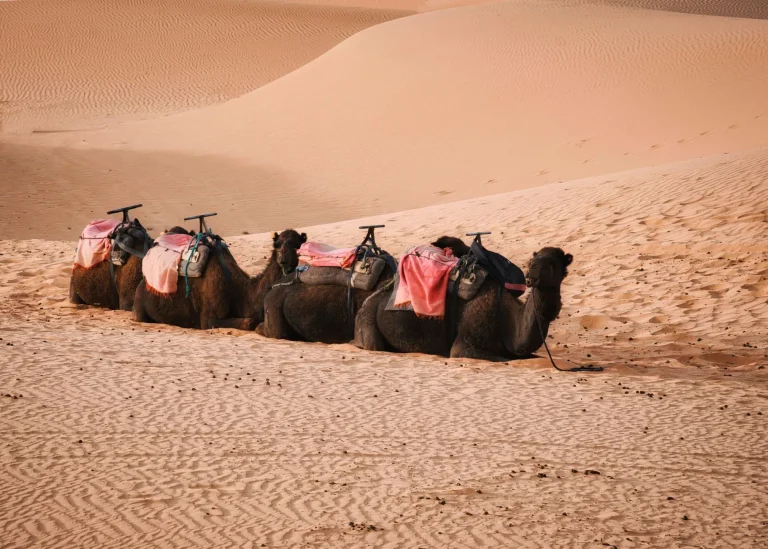
Camel rides are traditional for tourism around Merzouga, but they are not the only option. Walking or 4×4 transfers may suit comfort, mobility or animal-welfare preferences better. Prices depend on camp packages and duration. Ask exactly what the transfer includes. If you choose a camel ride, shorter is often enough; the dunes are memorable because of the landscape, not because of hours in the saddle.
44. Stop in Erfoud for dates and fossils
Erfoud is a practical stop between oasis country and Merzouga. Workshops and shops display local fossil stone, while dates are important to the region. Browsing is free; buying depends on quality and size. Ask how a piece was made before paying a premium for “rare” material. Visit during daylight if you want to see workshops rather than only roadside retail.
45. Give the southern route enough days
Marrakech to Merzouga should not be treated as a quick out-and-back. The best version includes Aït Benhaddou or Ouarzazate, Tinghir/Todra and at least one night by the dunes. This costs more than a rushed group trip because it uses more nights, but the journey becomes the experience. If your schedule is too short, choose the Atlas or Essaouira instead of forcing the Sahara.
Food and market experiences
46. Eat Friday couscous where locals actually order it
Friday remains strongly associated with couscous in many Moroccan homes and restaurants. A good plate can be inexpensive in a neighbourhood restaurant and much more costly in a riad. Ask what is served that day rather than demanding a fixed topping combination. Lunchtime is the natural moment. The dish makes more sense as a weekly social meal than as a decorative dinner plate.
47. Try Moroccan street food selectively
Street food can be one of the cheapest ways to eat well, but busy does not automatically mean safe. Choose stalls with high turnover, food cooked in front of you and clean handling. Prices are usually low compared with sit-down restaurants. Our Moroccan street food guide explains what to look for in Marrakech, Fès and coastal towns.
48. Take a cooking class with market shopping
A cooking class is most useful when it includes ingredients, spice identification and market context rather than only following a recipe in a kitchen. Prices vary from small group classes to private experiences. Book one with a clear menu and recent reviews. Morning classes fit best because markets are active and the meal becomes lunch. Ask whether drinks and market purchases are included.
49. Learn the difference between mint tea, amlou and regional products
Tea is everywhere, but regional products tell you more about geography. Amlou is associated with the southwest; saffron, honey, olives and argan products vary by area. Tastings may be free in shops or included in meals. Buy food products from transparent sellers and check whether argan oil is culinary or cosmetic. A cooperative label alone is not proof of quality.
Craft, culture and slower travel
50. Leave room for something you did not plan
The final thing to do in Morocco is not another monument. Leave one afternoon without a booking. Sit in a café, return to a market, accept that lunch takes longer than expected or follow a street you ignored the day before. It costs little and often becomes the memory that survives the trip. A useful itinerary creates space instead of trying to prove how much you saw.
How much time and money to allow
The list mixes free walks, ticketed monuments, food, transport and multi-day experiences, so there is no useful single “cost of doing Morocco”. The better approach is to separate the trip into four budgets: accommodation, intercity transport, daily food, and paid experiences. A medina walk or beach day can cost almost nothing; a private driver, desert camp or guided mountain day changes the daily total substantially.
As of 2026, avoid building a budget from old blog posts with fixed ticket prices. Museum and monument fees, guide rates and transport fares can change. Use current official or operator information shortly before travel, then keep a small cash buffer for taxis, tips, market purchases and places that do not take cards.
Book the hard parts, leave the easy parts flexible
Reserve the things that can genuinely fail if left late: a specific riad room, a desert camp you care about, a private driver on a fixed date, a popular cooking class or a flight connection. You do not need to pre-book every lunch, hammam and medina walk.
That flexibility matters because Morocco rewards changes of plan. Wind can alter a beach day, heat can make an afternoon walk unattractive, and a city you expected to rush through may deserve another night. A good itinerary protects the essential bookings while leaving ordinary days adjustable.
Transport is part of the experience
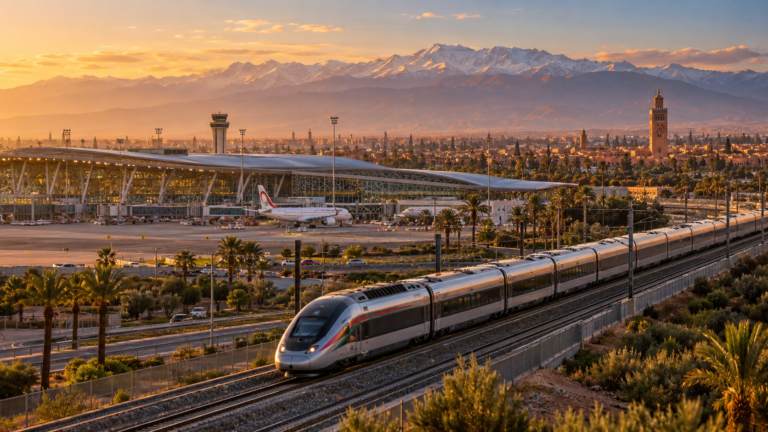
Rail is efficient between many major northern and Atlantic cities, while the Atlas, remote valleys and the Sahara edge require road travel. Do not compare routes only by kilometres. Mountain roads, stops and traffic make a short-looking transfer take longer than expected.
If a destination adds a full travel day in each direction, ask whether it belongs on this trip or the next one. Removing one distant stop often creates enough time to enjoy three nearby experiences properly.
How to use these 50 experiences
Do not attempt all fifty in one trip. For seven days, choose one city cluster plus one landscape. For ten days, add either the Sahara route or the north. Two weeks gives enough time for Marrakech, the south and an Atlantic finish without turning every other day into a transfer.
If this is your first visit, build the route with our Best Places to Visit in Morocco guide. Then check when to visit Morocco month by month before fixing dates.
Final advice
The best Morocco trip is not the one with the most boxes ticked. It is the one where the distances make sense, the days have enough space and each region feels different from the one before it. Use this list as a menu, not a challenge.
Leave a comment