
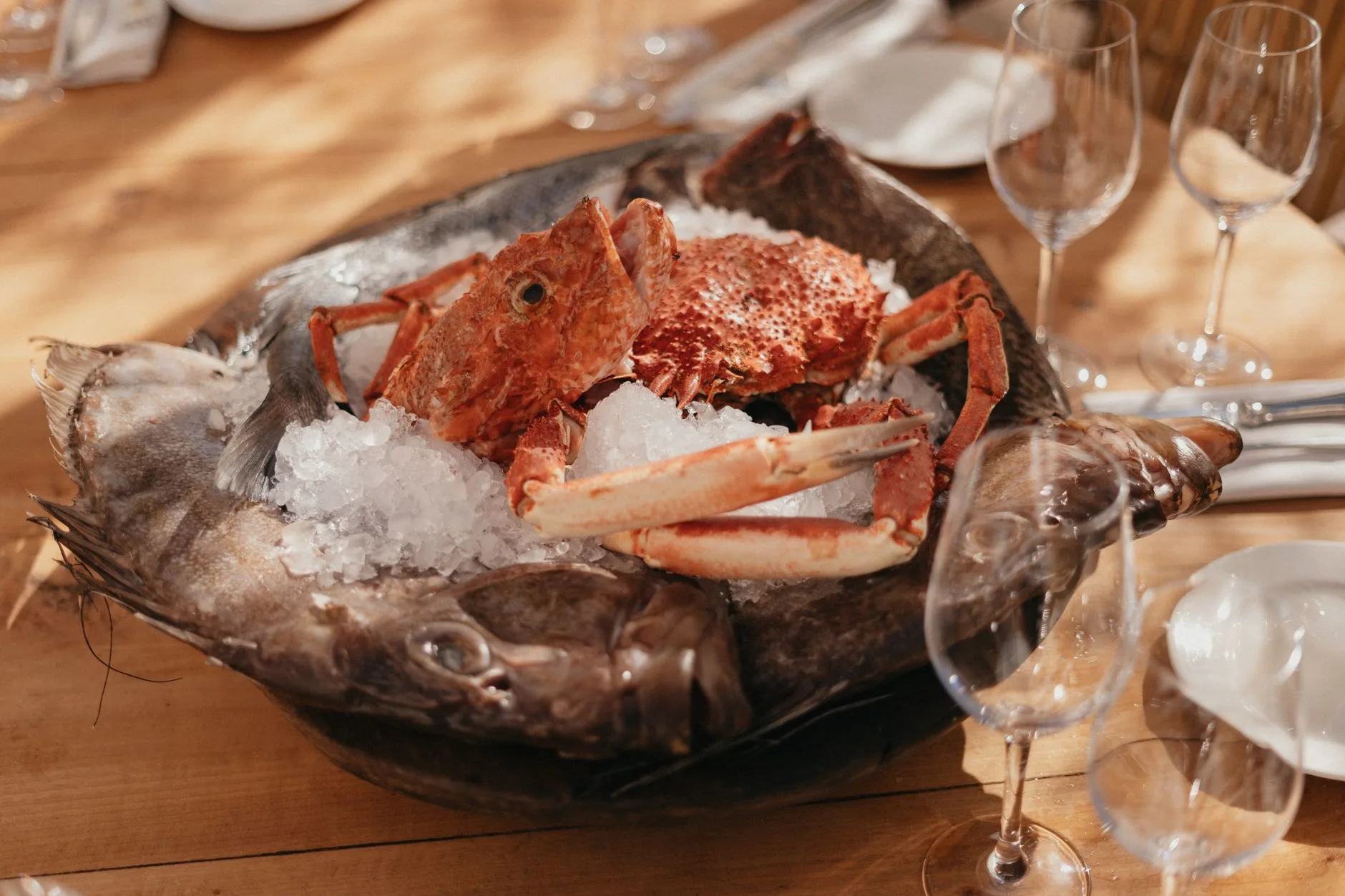
Morocco is better known abroad for tagines, couscous and pastilla than for seafood, but that misses an entire side of the country. The Atlantic coast shapes what people eat from Tangier and Essaouira to Agadir and farther south. Fishing ports, harbour grills, fish markets and simple family restaurants serve a style of food that is often less elaborate than inland Moroccan cooking: fresh fish, charcoal, lemon, cumin, chermoula, bread and salads.
The Moroccan National Tourist Office highlights the fishing port and fish market as part of the Essaouira experience, and it presents Agadir-Taghazout as one of the country’s major coastal food destinations. That official picture matches the practical reality: if seafood is the priority, the coast deserves several days rather than a quick lunch stop.
Essaouira: grilled fish straight from the harbour
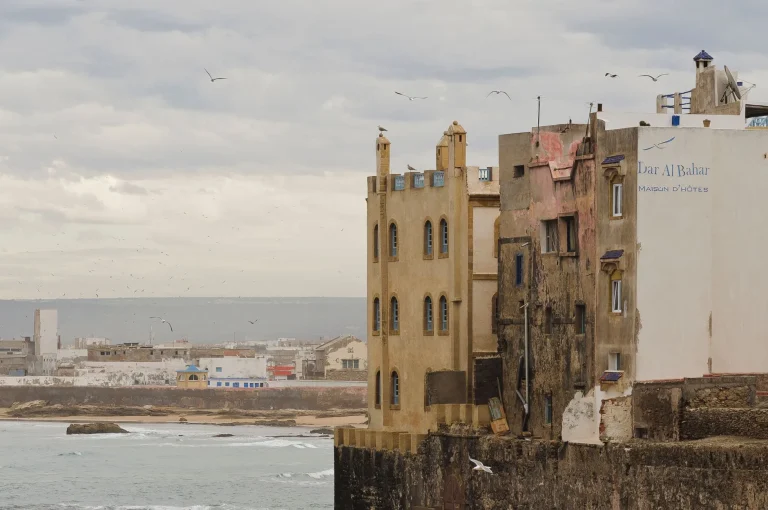
Essaouira is the easiest place for a first encounter with Moroccan harbour food because the port, medina and main square sit close together. Blue boats unload their catch beside the ramparts, fish is traded around the port, and grills operate nearby. The atmosphere is part of the meal: gulls overhead, smoke from charcoal, sea air and the constant movement of fishermen and vendors.
Sardines are the classic order, but the available catch changes. Sea bream, sole, squid, prawns and other local fish may appear depending on season and supply. The best strategy is not to arrive determined to order one species. Look at what is actually fresh, ask the price before cooking, and choose the simplest preparation.
For a cleaner flavour, ask for fish grilled with lemon and salt and take chermoula on the side. Chermoula — commonly built around herbs, garlic, cumin, paprika, lemon and oil — is one of the defining flavours of Moroccan fish cookery.
Agadir: a larger, more modern seafood scene
Agadir feels completely different from Essaouira. It is a modern resort city with a long seafront and a much larger urban restaurant market. The Moroccan National Tourist Office describes the Agadir-Taghazout area as a major seaside destination and specifically points to its waterfront restaurants and local gastronomy.
That means more choice: simple grills, seafood restaurants, hotel dining and places aimed squarely at holidaymakers. Whole grilled fish is usually the safest benchmark for judging quality. If the fish looks fresh and the preparation is simple, the kitchen has less room to hide poor ingredients under sauce.
Taghazout and the villages north of Agadir add a surf-town version of the same idea: casual terraces, fish plates, salads and long lunches after the beach.
What to order on the Moroccan coast
Sardines
Morocco has a strong sardine tradition, and the fish works particularly well over charcoal. In informal restaurants it may arrive whole, simply seasoned, with bread and salad. Stuffed or spiced sardine preparations also appear in homes and more traditional kitchens.
Whole grilled fish
Sea bream, bass, sole and whatever is locally available are often served whole. Ask the restaurant to show you the fish before it goes to the grill if you are ordering by weight. Clarify the price and whether it is per fish, per portion or by weight.
Seafood pastilla
Seafood pastilla is very different from the classic sweet-savory Fès version. It typically combines seafood with vermicelli, herbs and spices inside crisp pastry. It is richer than grilled fish and better shared as part of a longer meal.
Fried fish
Small fried fish and mixed seafood plates are common around ports. They can be excellent, but freshness and frying oil matter. Busy places with fast turnover are usually a better bet than empty tourist restaurants with a very long menu.
Moroccan sides that work best with seafood
Seafood meals are rarely only about the fish. Zaalouk, made from aubergine and tomato, and taktouka, based on peppers and tomato, are two of the most useful sides to know. They add acidity and vegetables without overwhelming grilled fish. Bread is essential, both for eating sauces and for turning a simple plate into a full meal.
The Moroccan National Tourist Office lists these vegetable starters among the country’s characteristic food traditions and places Moroccan cuisine within a wider mix of Amazigh, Arab-Andalusian and Jewish influences.
How to order without surprises
- Ask the price before cooking. At informal fish stalls, never assume the displayed price includes cooking, salad, bread or drinks.
- Check whether the price is by weight. This matters for larger fish and mixed platters.
- Choose what is visibly fresh. A shorter list of the day is often a better sign than a huge permanent menu.
- Keep the preparation simple. Charcoal, lemon and chermoula are enough when the fish is good.
- Do not chase a specific species. The daily catch changes.
Food safety: the practical rules
Morocco has a formal food-safety framework administered by ONSSA, the National Office for Food Safety. Its official regulations include Law 28-07 on the sanitary safety of food products and rules governing food-sector establishments. For travellers, the useful lesson is simpler: regulation exists, but conditions still vary widely between restaurants and street stalls.
Choose busy places with visible turnover, avoid seafood that has been sitting in heat, and be cautious with raw shellfish if you cannot judge storage conditions. If you have allergies, make them explicit: cross-contact information is not always displayed as systematically as travellers may expect at home.
For water and hygiene, follow the same common-sense approach you would use anywhere with unfamiliar food systems. Wash hands before eating, use sealed water if you are uncertain about the local supply or your own tolerance, and do not assume that an expensive restaurant automatically handles food better than a busy neighbourhood grill.
Best coastal food trip: a simple route
If food is the main reason for travelling, a strong Atlantic sequence is Essaouira, Agadir and Taghazout. Essaouira gives you the historic port and medina atmosphere; Agadir gives you range and scale; Taghazout adds a relaxed surf-town rhythm. With more time, Oualidia is worth considering for lagoon seafood, while the far south offers an entirely different Atlantic landscape.
When to go
There is no single seafood season that covers the entire coast and every species. Weather, sea conditions and fishing activity all change what appears in markets. Essaouira is notably windy, while Agadir is milder and more resort-oriented. If you care more about the dining experience than swimming, shoulder seasons are often more comfortable than peak summer.
Final advice
The best Moroccan seafood meal is usually not the most elaborate one. It is the meal where you can see the fish, understand the price, smell the charcoal and watch plates moving quickly from grill to table. Let the catch dictate the order, keep the preparation simple, and treat the port itself as part of the experience.
Continue planning
For the wider food culture, see our Moroccan cuisine guide, compare informal eating in the street-food guide, and use the Essaouira guide to build a coastal stop around the meal.
Leave a comment