


Moroccan food has a reputation problem abroad, and the problem is that it travels badly. What arrives in European and American restaurants is a narrow slice — chicken tagine with olives, couscous with seven vegetables, a dessert involving orange-blossom water — reproduced without the two things that make the cuisine work: time, and a household.
Most of the best Moroccan cooking is not restaurant cooking. It is slow, it is done in quantity, and a good deal of it is tied to a specific day of the week, a specific season, or a specific life event. That is worth knowing before you go looking for it.
The techniques
The tagine is a pot
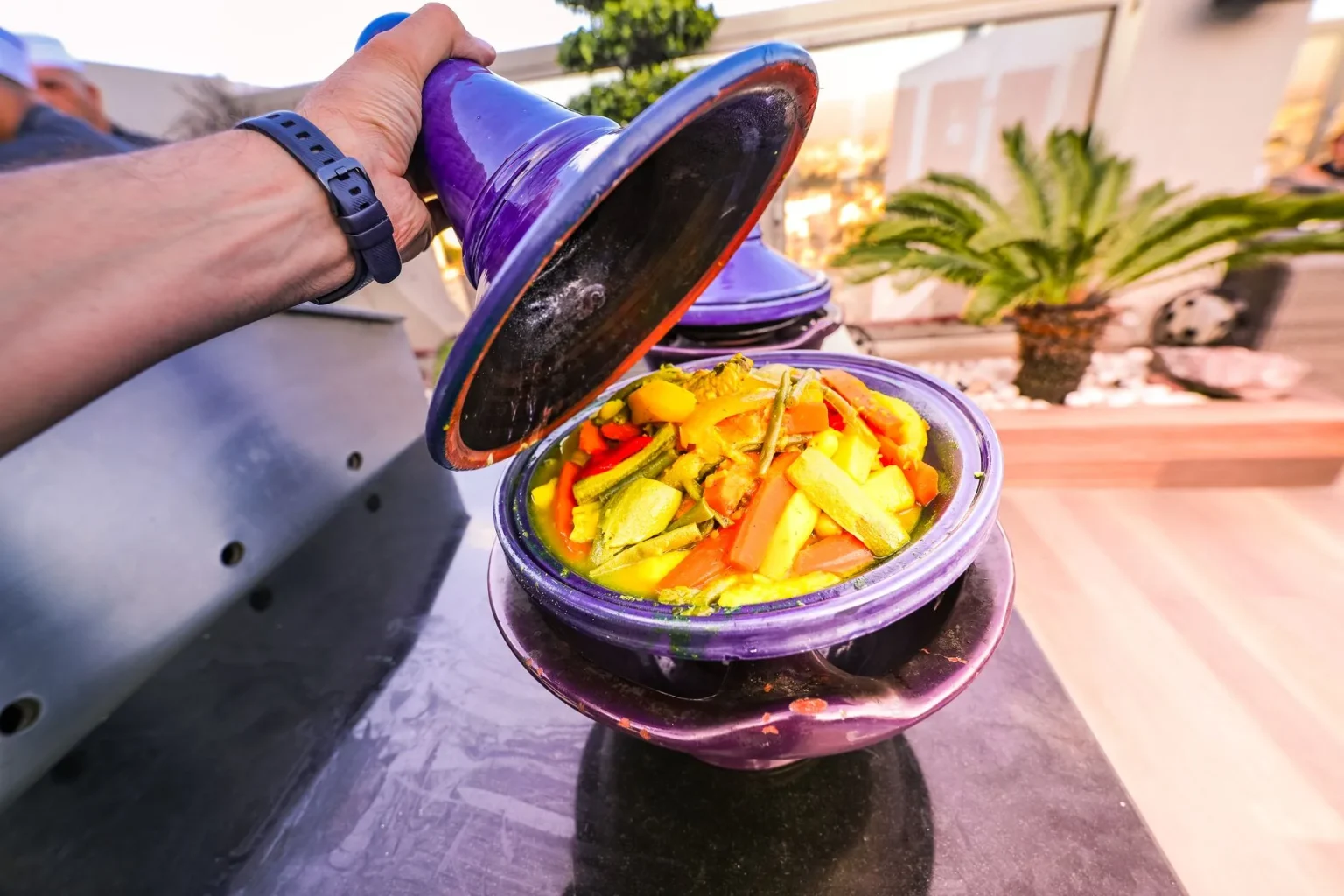
Before it is a dish, tagine is a vessel: a shallow earthenware base with a tall conical lid. The cone is not decorative. Steam rises, condenses against the cold clay at the peak, and runs back down the inside walls into the food. It is a self-basting system that lets you cook meat for hours over very low heat with almost no liquid.
That is why a proper tagine tastes concentrated rather than stewed. It is also why a tagine cooked in forty minutes in a restaurant kitchen is a different dish wearing the same hat.
The classics are worth knowing by name. Lamb with prunes and almonds — sweet, dark, cinnamon-heavy, the celebration dish. Chicken with preserved lemon and olives — sharp and saline, the most exported and still one of the best. Kefta mkaouara — meatballs in tomato with eggs cracked in at the end, cheap and excellent. Fish chermoula on the coast.
Couscous is a Friday
Couscous is not a side dish and it is not a weeknight meal. In Morocco it is the Friday lunch, eaten after midday prayers, and it is a communal dish arriving on one large platter.
Making it properly means steaming the semolina three times in the upper chamber of a couscoussier, raking it out and working it with oil and water between each steaming. The broth and vegetables cook below. Done correctly the grains are separate and light; done with the instant product they are a paste.
If you are in Morocco on a Friday, eat couscous. If you are offered couscous in a restaurant on a Tuesday, adjust your expectations.
The spice cabinet
Moroccan cooking runs on warmth rather than heat. Cumin, sweet paprika, ginger, turmeric, cinnamon, black pepper, coriander seed, saffron. Chilli appears mainly as harissa on the side, which is more Tunisian in origin than Moroccan.
Ras el hanout translates as “head of the shop” and means the merchant’s own blend — the best he has. There is no fixed recipe. A serious blend runs to twenty or thirty components and may include rosebud, grains of paradise, mace and cubeb. Every spice seller’s version differs, which is the point.
Chermoula is the marinade that defines Moroccan fish: coriander, parsley, garlic, cumin, paprika, lemon, olive oil. It is used for everything from sardines on a harbour grill to baked whole sea bass.
Preserved lemons — salted and left to ferment for weeks until the rind turns soft and the flavour turns from sour to something rounder and almost floral — are the ingredient home cooks will tell you cannot be substituted, and they are right.
The dishes worth travelling for
Pastilla
The great dish of Fès and the one that surprises people most. Layers of tissue-thin warqa pastry around shredded pigeon — now usually chicken — cooked with onion, saffron and cinnamon, bound with egg, layered with crushed almonds, baked, and finished with icing sugar and cinnamon on top.
Sweet and savoury in the same mouthful, and it works. The Andalusian inheritance is at its clearest here. In Essaouira you will find a seafood version, with no sugar, that is a different and equally good dish.
Tanjia
Marrakech’s own, and the one to hunt down.
Beef or lamb, preserved lemon, garlic, cumin, saffron and smen — aged, fermented butter — sealed into a tall clay urn and buried in the ash-pit of a neighbourhood hammam furnace, where it cooks for five or six hours in the residual heat.
It is traditionally a bachelors’ dish, prepared by men, dropped off at the furnace in the morning and collected in the afternoon. The meat comes out falling apart and deeply savoury. Very few restaurants do it properly; ask in Marrakech and follow the answer.
Mechoui
Whole lamb, slow-roasted in a pit oven until the skin is lacquered and the meat lifts off in handfuls. Eaten with cumin and salt and nothing else. Feast food — weddings, Eid — and sold by the kilo at a few dedicated stalls in Marrakech.
Harira
The soup of Ramadan: tomato, lentils, chickpeas, coriander, sometimes lamb, thickened with a flour-and-water tadouira. The fast is broken with dates, then harira, then chebakia — sesame pastry deep-fried and soaked in honey.
It is served year-round and it is a full meal for the price of a coffee.
Rfissa
Shredded msemen or trid flatbread under chicken cooked with lentils, fenugreek and ras el hanout. Traditionally made for a woman after childbirth — fenugreek is understood to aid recovery and milk production — and now eaten far more widely. Rarely on menus, frequently in homes.
Bissara
Dried fava beans cooked down to a thick purée, poured into a bowl, finished with olive oil, cumin and paprika. Breakfast in the north, and the standard morning meal in Chefchaouen and the Rif. Almost free, and better than it sounds.
Breakfast and the bread
Moroccan breakfast is a bread event.
Msemen — square, laminated, folded and fried, flaky and slightly chewy. Baghrir — semolina pancakes raised with yeast, covered in small holes, known as thousand-hole pancakes, served with melted butter and honey. Harcha — a dense semolina griddle cake. Sfenj — doughnuts fried in the street and handed over threaded on a loop of palm frond.
With that: olives, soft cheese, apricot jam, olive oil, and in the south amlou — argan oil, roasted almonds and honey ground to a thick paste. Amlou is the Souss region’s contribution to the world and is worth bringing home.
The bread itself, khobz, is not an accompaniment. It is the utensil. It is torn with the right hand and used to pick food from the shared dish, and cutlery is frequently not offered because it is not needed.
Mint tea, properly
Gunpowder green tea, fresh spearmint, and a great deal of sugar.
The leaves are rinsed with a first pour that is discarded. The pot is filled, the mint and sugar added, and the tea poured from a height into small glasses — not for display, but to aerate it and build the foam on the surface, which is considered the mark of a properly made glass.
The Maghrebi proverb attached to the three glasses of a sitting is usually rendered: the first gentle as life, the second strong as love, the third bitter as death. You will be offered tea constantly, including in shops where a purchase is hoped for. Accepting does not commit you to anything. Refusing three times is normal and expected.
If you do not want the sugar, say so before it is made. Afterwards is too late.
The regions
Fès and Tetouan cook the most refined food in the country — the Andalusian inheritance, brought by families expelled from Spain, showing in the pastry work, the use of almonds, and the sweet-savoury register. Pastilla is the emblem.
Marrakech is earthier: tanjia, mechoui, the grills of Jemaa el-Fnaa after dark.
The Atlantic coast — Essaouira, Agadir, Oualidia — is where the seafood is. Sardines grilled at the port, whole fish under chermoula, and Oualidia’s oysters, farmed in the lagoon and eaten on the water’s edge. See our guide to the Moroccan coast for where these towns sit.
The Rif does mountain food: goat cheese, bissara, lamb with the vegetables of a fertile and much-rained-on region.
The Souss, around Agadir and Taroudant, is argan country. Culinary argan oil — roasted, nutty, entirely different from the cosmetic grade — goes into amlou and into tagines.
The Sahara and the south have medfouna, a stuffed flatbread baked in sand and ashes, known to visitors as Berber pizza, and a tradition of preserving meat as khlii because refrigeration was not an option.
Sweets
Moroccan pastry is almond-based and tied to occasions. Kaab el ghzal — gazelle horns — are crescents of thin pastry around almond paste scented with orange blossom. Briouat are sweet or savoury triangles in warqa. Chebakia belongs to Ramadan. Sellou, a dense unbaked mixture of toasted flour, almonds and sesame, is made for celebrations and for new mothers.
Fruit closes most meals. The oranges are exceptional and, in season, so are the melons and the dates from the Draa valley.
Practical notes
- Eat with your right hand. The left is not used for food. Three fingers is the traditional form.
- Street food is generally safe where turnover is high and cooking is done in front of you. Grilled and fried items at busy stalls are a better bet than anything sitting out.
- Vegetarians do reasonably well — vegetable tagines, bissara, zaalouk, taktouka, lentils, bread and salads. Confirm the couscous broth, which is usually meat-based. Vegans will find dairy and honey harder to dodge in breakfast and sweets.
- Alcohol is available in licensed restaurants, hotels and some supermarkets, and absent from most medina restaurants. Morocco makes serious wine in the Meknès region.
- Ramadan closes most daytime food service. Evenings become extraordinary.
- The best meal you will eat is likely to be dinner cooked in a riad on request. It is home cooking, made in a domestic kitchen, at a fraction of what the rooftop restaurants charge. Ask in the morning for the evening.
The short version
Eat couscous on Friday. Find tanjia in Marrakech and pastilla in Fès. Have bissara for breakfast at least once. Buy amlou before you leave. And when someone in a shop offers you tea, take it — then buy nothing, and thank them properly. That is understood, and it is how the country works.
