

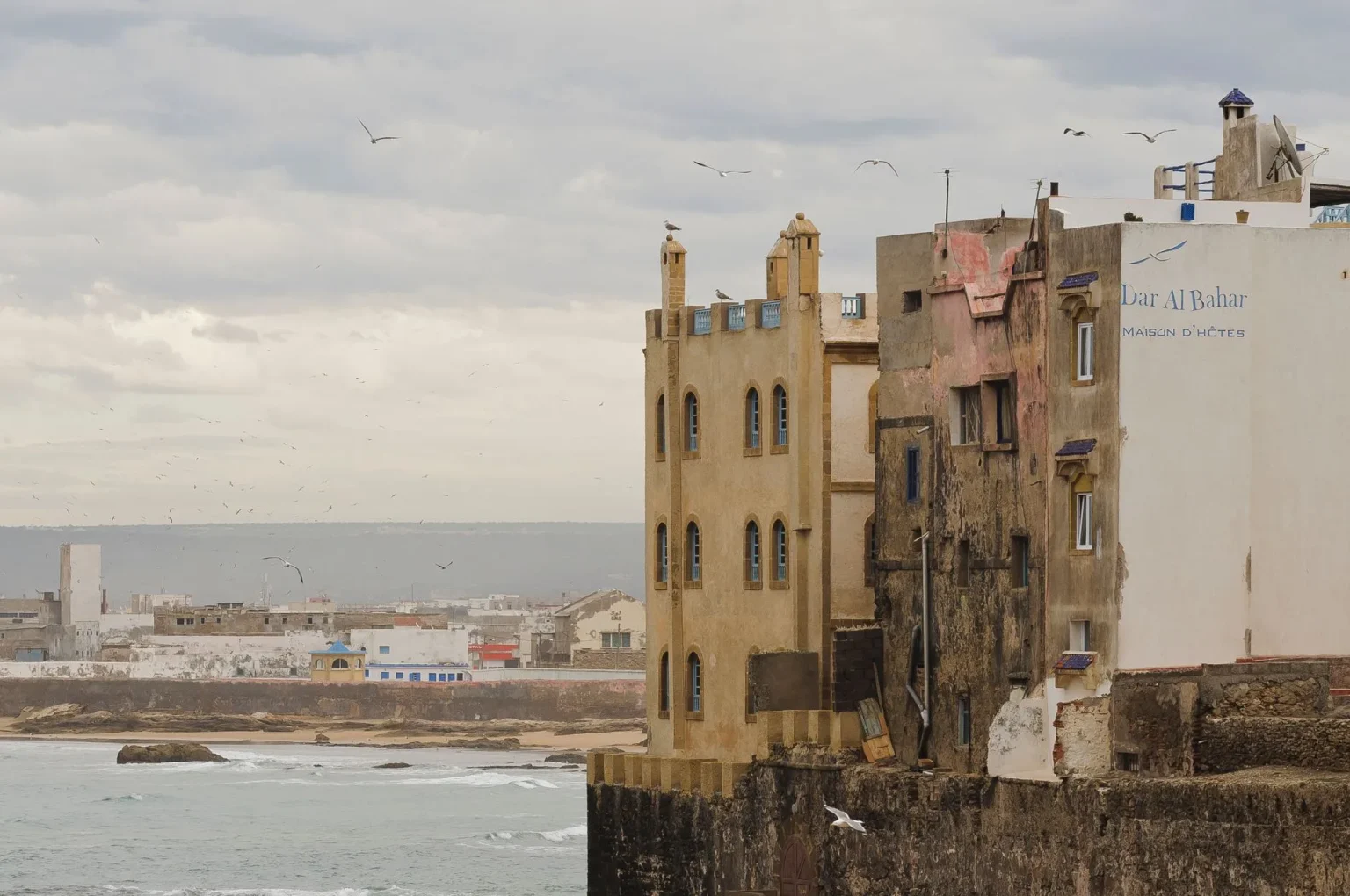

There is no single answer to when to visit Morocco, because the country runs four climates simultaneously. In February you can be on a beach in Agadir in the morning and in snow above Imlil by the afternoon. In August the coast is pleasant and Marrakech is punishing.
So the question is not when to come. It is where you are going and what you intend to do there.
The four Moroccos
The imperial cities — Marrakech, Fès, Meknès — sit inland and have a continental climate. Very hot summers, cool damp winters, and comfortable shoulder seasons.
The Atlantic coast — Essaouira, Agadir, Casablanca, Rabat — is moderated by a cold current. It never gets very hot and never gets very cold. It is windy.
The mountains — the High Atlas and the Rif — are cold, get real snow, and are a different proposition from the plains below them at every time of year.
The Sahara is extreme in both directions: dangerous heat in summer, and nights near freezing in winter.
Month by month
January
Cold and wet in the north, cool and clear inland, cold at night in the desert. Snow on the Atlas and skiing at Oukaïmeden above Marrakech.
Cities are at their emptiest and cheapest. Riads are stone buildings with open courtyards — check the heating before you book, because this is the month it matters.
Good for: cities without crowds, mountain snow, low prices. Bad for: swimming, Chefchaouen and the Rif, anyone who feels the cold.
February
As January but improving. The almond blossom comes out in the Souss and the Anti-Atlas towards the end of the month, which is a genuinely beautiful thing to plan around.
Desert days are pleasant and desert nights are near freezing.
March
The season begins. Wildflowers across the Rif and the Middle Atlas, the mountains still white, the cities warm by day and cool in the evening.
One of the two best months for a first trip.
April
Arguably the best month in the country. Everything is green, the Atlas is walkable at lower altitudes with snow still visible above, the desert is comfortable, and the coast has started to warm.
Prices are high and the good riads book up. Reserve early.
May
Still excellent. Warmer inland — Marrakech begins to show what it is capable of — and the coast is at its most pleasant. The Rif and the Middle Atlas are at their best for walking.
Ramadan has fallen in this part of the year in recent years and moves earlier annually; check the dates against your trip.
June
The turn. Marrakech and Fès are hot by the middle of the month. The coast is ideal. Desert trips are still possible but need early starts.
Essaouira’s Gnaoua festival usually falls in June and fills the town completely.
July
Inland is severe. Marrakech routinely passes 40°C and the medina holds the heat into the night. Fès is the same. The Sahara is genuinely dangerous in the middle of the day and most desert camps close or run reduced operations.
The coast, meanwhile, is excellent — Essaouira in the high twenties with a strong wind, Agadir warm and dry.
Hotel rates inland drop substantially.
Good for: the coast, watersports, the High Atlas at altitude, low inland prices. Bad for: sightseeing in the imperial cities, the desert.
August
As July, plus the domestic season. Moroccans holiday on the coast in August and Moroccans living in Europe come home, which fills the northern ferry ports and every beach town in the country.
Book coastal accommodation well ahead. Inland, do the monuments before ten and disappear until six.
September
The heat breaks in the second half of the month and the second good season starts. The sea is at its warmest, having absorbed the summer.
Excellent for the coast and increasingly comfortable inland.
October
The other best month. Warm days, cool nights, ideal desert conditions, comfortable cities, and the surf season starting on the Atlantic.
Prices rise accordingly.
November
Still very good, and quieter than October. First rain in the north. Autumn colour in the Middle Atlas — the cedar forests around Ifrane and Azrou — which almost nobody goes to see.
December
Cold nights, mild days, real rain in the north. The desert is clear and cold, and the winter light is the best of the year for photography.
Christmas and New Year are a distinct high season in Marrakech, with rates up sharply and minimum stays common. Either side of those two weeks the country is cheap and empty.
By what you want to do
Cities and monuments: March–May, October–November.
The Sahara: October–April. Avoid June to August entirely.
Trekking in the High Atlas: April–June and September–October at altitude. Toubkal in winter is a mountaineering objective, not a walk.
Beaches and swimming: June–September, and the Mediterranean north rather than the Atlantic if warm water matters.
Surfing: October–April, when the North Atlantic swells arrive.
Kitesurfing and windsurfing: April–September in Essaouira; Dakhla works year-round.
Skiing: January–February at Oukaïmeden, conditions permitting.
Lowest prices: mid-January to mid-February, and July–August inland.
Ramadan
Ramadan follows the lunar calendar and moves roughly eleven days earlier each year, so the dates shift through the seasons over time. Check them for your specific year.
What it means as a visitor: hotels and tourist restaurants operate normally, but most ordinary cafés and restaurants close during daylight. Monuments keep shorter hours. The pace of everything slows by day.
Evenings are the compensation, and they are extraordinary. The moment the fast breaks — with dates, then harira — the whole country eats at once, and the cities come alive until very late.
It is a difficult month for a first trip focused on sightseeing and a remarkable one if you are interested in the country itself. Eid al-Fitr at the end closes almost everything for several days.
Two things that catch people out
The temperature swing. Inland and in the desert, the difference between day and night can be twenty degrees or more. Sahara nights in winter approach freezing. Pack layers regardless of the month.
Riads are cold in winter. A courtyard open to the sky is a cooling system, and it does not switch off in January. If you are coming between November and March, ask what the heating actually is before you book — see our guide to choosing a riad.
The short answer
If you have one trip and want to see the cities and the desert: April or October.
If you are coming for the beach or the wind: June to September, on the coast.
If you want the country cheap and to yourself and do not mind a jumper: late January.
