Packing for Morocco is easier once you stop treating the country as one climate. Marrakech in July, Essaouira in August, Ifrane in November and Merzouga at dawn can require completely different clothing. The practical goal is modest, breathable layers that work across heat, wind, dust and cool evenings.
The basic rule: dress for context, not fear
Morocco is socially diverse. Beach resorts, Casablanca business districts, Marrakech tourism zones and conservative rural villages do not look the same. Visitors are not expected to dress exactly like locals, but clothing that covers shoulders and reaches around the knee is an easy default in traditional medinas and smaller towns.
For women, a loose shirt, trousers, long skirt or midi dress works well. For men, T-shirts and trousers or longer shorts are normal in many tourist settings, with more conservative choices appropriate in formal or rural contexts.
What to wear by season
Spring: March to May
Spring can be warm in the sun and cool in the evening. Pack light trousers, breathable shirts, one warmer layer and a lightweight rain shell if northern or mountain travel is included.
Atlas trips require more layers than Marrakech even on the same day.
Summer: June to August
Loose cotton or linen is more useful than tight synthetic clothing. Inland cities can become extremely hot, while Atlantic towns such as Essaouira are often cooler and windier.
Sun protection matters more than fashion: hat, sunglasses, sunscreen and covered shoulders can be more comfortable than exposed skin in strong sun.
Autumn: September to November
Autumn is one of the easiest packing seasons because days are often warm while evenings cool. Bring a light jacket and add a warmer layer if the route includes the Atlas or desert.
Winter: December to February
Many visitors underestimate Moroccan winter. Sunshine can feel warm at midday, but riads, mountain towns and desert camps can be cold at night.
Pack a real insulating layer, not only a thin cardigan. Historic houses may feel colder indoors than modern hotels because of stone, tile and open courtyards.
What to wear by setting
What to wear in Marrakech and Fès medinas
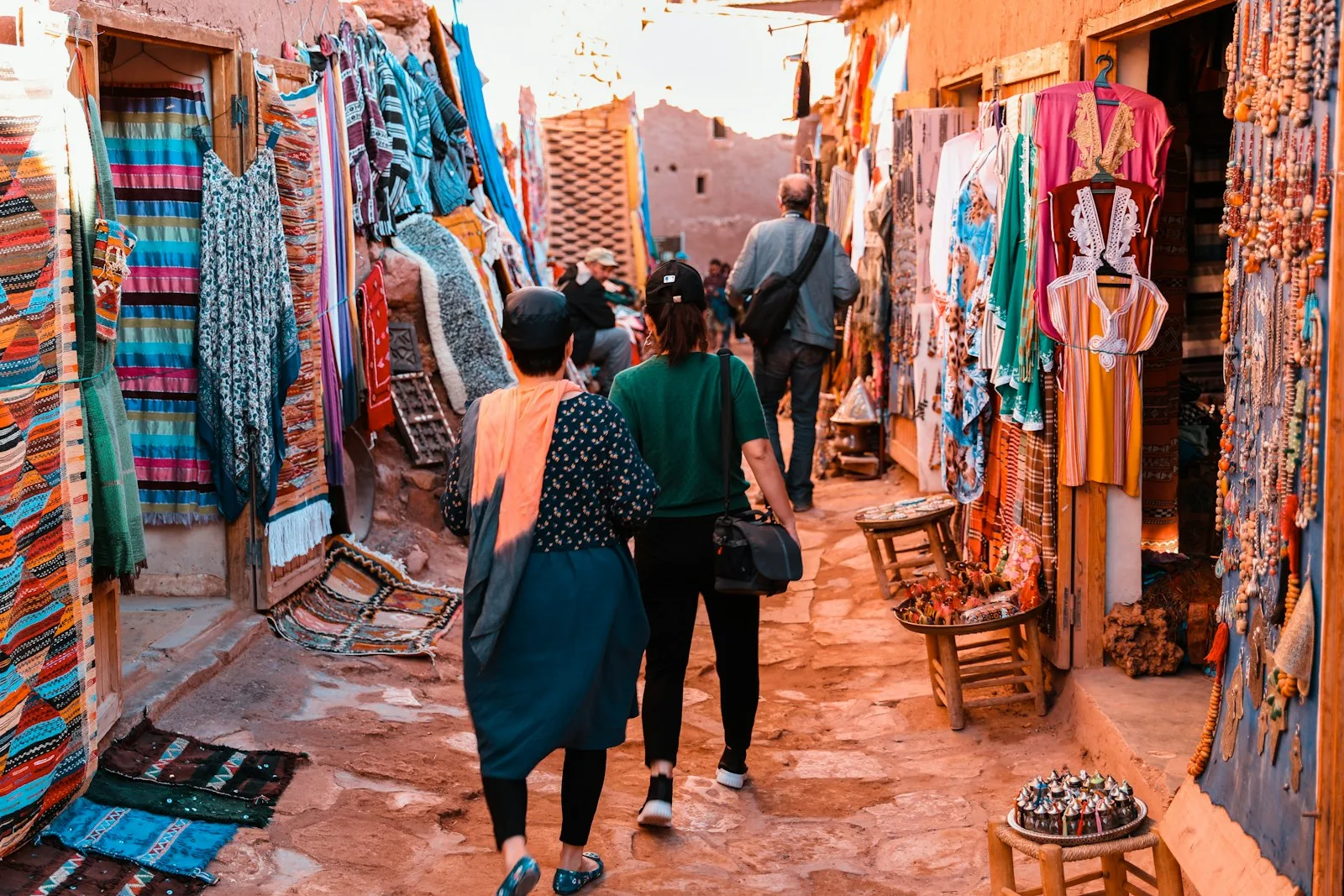
Comfortable walking clothes matter most. Narrow streets, crowds and uneven paving make very loose trailing garments and unstable shoes inconvenient.
A light overshirt is useful when moving between modern and more conservative areas.
What to wear on the coast
Beachwear belongs on the beach or by the pool. For walking through town, add a shirt, dress or cover-up. Essaouira’s wind can make a light layer useful even in summer.
What to wear in the Sahara
Desert clothing is about sun, dust and temperature change. Long lightweight trousers, a breathable long-sleeve layer, hat and sunglasses work well. Closed walking shoes or secure sandals are both possible depending on activity.
For overnight camps outside summer, bring a warm layer for after sunset and early morning.
Atlas Mountains
Mountain weather changes faster than city weather. Proper walking shoes, layers and rain protection are more important than trying to dress “Moroccan”. For longer treks, pack for the elevation and forecast.
Religious sites
Most mosques in Morocco are not generally open to non-Muslim visitors, with notable exceptions such as Hassan II Mosque in Casablanca under its visitor arrangements. Where visitors are admitted, dress modestly and follow the site’s rules.
Do not pack special religious clothing on the assumption that every mosque visit will require it. Check the specific site instead.
Footwear and practical packing
Shoes
Good shoes are one of the highest-value packing choices. Medina paving can be uneven, polished and slippery when wet. Supportive trainers, walking shoes or secure sandals are far better than loose flip-flops for long days.
The scarf
A lightweight scarf is useful without being compulsory. It can provide sun protection, warmth, dust protection and an extra layer of modesty when wanted.
You can also buy one locally, but do not plan your packing around a fixed “souvenir price”; quality and price vary enormously.
What not to bring
- Too many heavy outfits.
- Only beach footwear.
- Clothes that require ironing to look acceptable.
- A single jacket expected to work for both coast and high mountains.
- Valuable jewellery you will worry about losing.
Laundry
For trips longer than a week, pack less and use laundry services. Riads, hotels and city laundries can usually handle ordinary washing, which is more practical than carrying two weeks of clothes.
A simple packing list
- 2–3 breathable tops.
- 1 long-sleeve shirt.
- 2 pairs of comfortable trousers or equivalent.
- 1 warmer layer.
- 1 light rain/wind layer depending on season.
- Walking shoes.
- Secure sandals if useful.
- Hat, sunglasses and sunscreen.
- Light scarf.
Final advice
Pack for climate first, walking second and local context third. You do not need a costume for Morocco. You need clothes that let you move comfortably through a hot square, a cool riad, a windy coast and a conservative neighbourhood without thinking about your outfit all day.
Dress, identity and travel style
Women: practical choices without overcorrecting
Women do not need to hide themselves to travel in Morocco. The most useful wardrobe is simply adaptable: loose trousers or skirts, breathable tops, one longer layer and a scarf if wanted. That works in medinas, restaurants and rural stops without requiring a separate outfit for every setting.
At hotel pools and established beach resorts, normal swimwear is common. Add a cover-up when moving back into streets, shops or public transport.
Men: the same context rule applies
Men sometimes assume dress advice applies only to women. In conservative or formal settings, very short shorts and beachwear can look equally out of place. Lightweight trousers or longer shorts and a clean shirt solve almost every situation.
What locals wear is not a costume
Djellabas, kaftans, babouches and other Moroccan clothing have cultural and everyday contexts. Buying a well-made garment can be a meaningful souvenir, but there is no need to dress “as a Moroccan” to show respect.
Respect is better communicated through behaviour, permission before photographs and awareness of religious or family spaces than through imitation.
Tech and valuables
A small cross-body bag or secure day bag is more useful than carrying valuables in open pockets. Bring a power bank for long day trips and keep charging cables together rather than spreading electronics across luggage.
Expensive camera equipment is common in tourist areas, but carry only what you will use. Heavy gear becomes its own problem in a medina.
One-bag packing for 7–10 days
Morocco is easy to pack light for because layering solves most temperature changes and laundry is widely available. Three tops, two bottoms, one warm layer, one weather layer and two pairs of footwear cover a surprising range of trips.
Use the saved space for the things you actually want to bring home rather than packing a different outfit for every photograph.
Continue planning
Match clothing to weather with our month-by-month guide, review additional solo-travel considerations in the solo female safety guide, and see family-specific needs in the family holiday guide.
Leave a comment