Your first trip to Morocco is easier once you know which details travel brochures tend to skip. The country is not difficult to visit, but it works differently from a standard European city break: medinas are dense, road distances can be deceptive, cash still matters in many situations and the best accommodation may be several minutes’ walk from the nearest car.
These are the practical things I would want a first-time visitor to know in 2026 before arriving.
A medina address is not the same as a normal street address
In Marrakech and Fès, your riad may be inside lanes that cars cannot enter. A taxi can drop you near a gate or square, but the final part may be on foot.
Ask the accommodation for an exact meeting point before arrival and save the phone number offline. If you arrive late, arrange the transfer directly with the property rather than assuming a driver can find the door.
Your first hour in Fès can determine how you feel about the city
Fès el-Bali is dense and deliberately not organised like a modern grid. If you arrive tired and immediately try to navigate every lane alone, the city can feel harder than it is.
Consider a licensed guide for the first orientation, then explore independently. Our Fès medina guide explains how to approach it without turning the experience into a maze challenge.
Marrakech needs structure, but not a minute-by-minute plan
Group nearby sights together and leave space between them. Crossing the medina repeatedly wastes time and energy.
Our Marrakech guide is designed around realistic areas rather than an oversized checklist.
Cash is still useful
Cards are common in hotels, larger restaurants and many modern businesses, but cash remains useful for small shops, taxis, markets, tips and simpler restaurants.
Do not rely on one card. Keep a second payment method separate and withdraw sensible amounts rather than carrying the entire trip budget. ATM fees and bank charges vary, so check your own provider before departure.
Taxis are simple once you understand the system
City taxis and longer-distance shared or private taxis are different things. In larger cities, ask for the meter where appropriate or agree the fare before departure when the meter is not being used.
If a hotel arranges a transfer, expect it to cost more than a street taxi in exchange for certainty and direct coordination.
The map makes Morocco look smaller than the journey feels
Marrakech, Fès, Chefchaouen, Essaouira and Merzouga do not form one easy loop. Mountains, road speeds and transfers make the journey longer than the straight-line distance suggests.
Use our best places to visit in Morocco guide to build one coherent route rather than collecting famous names.
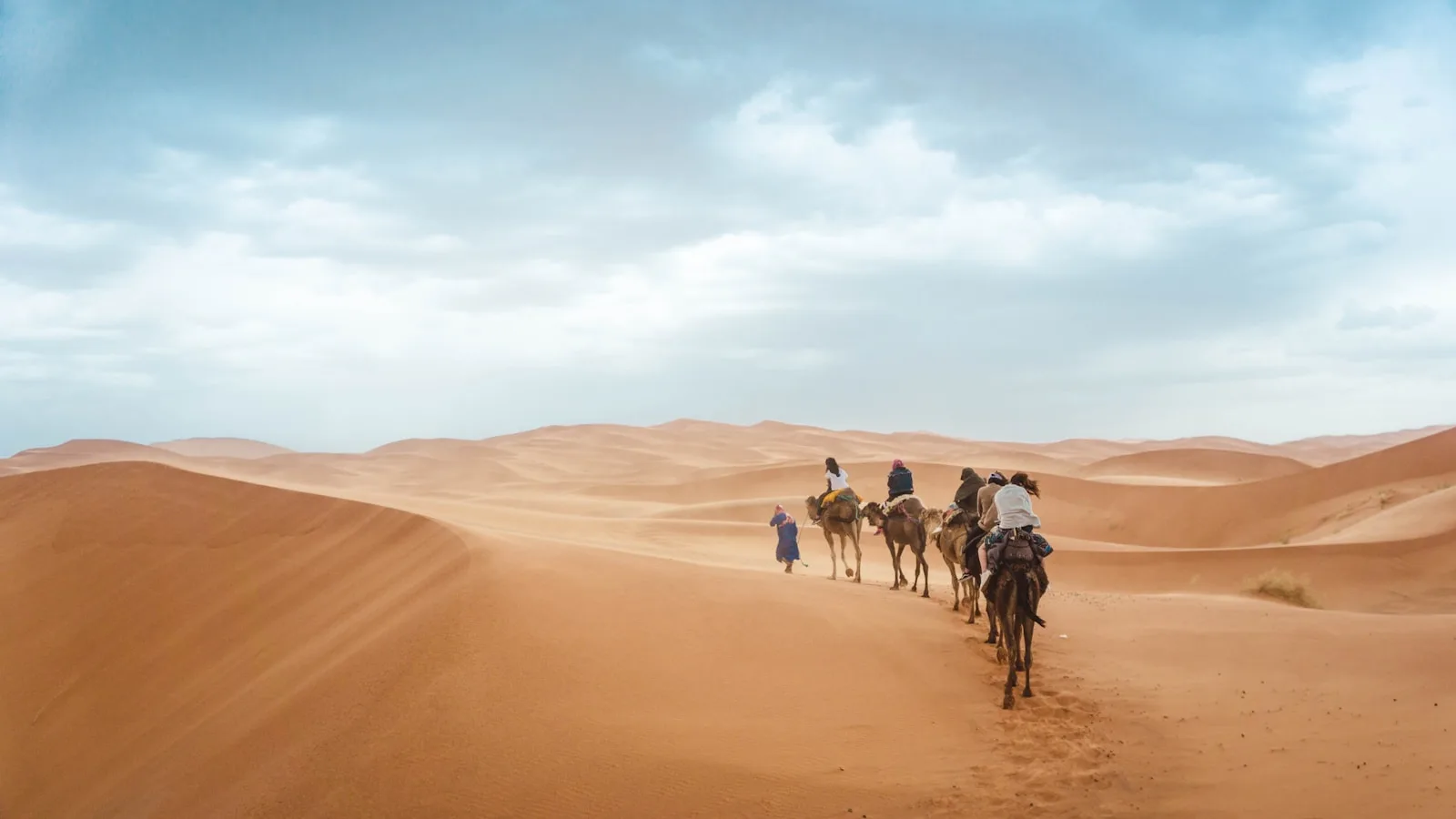
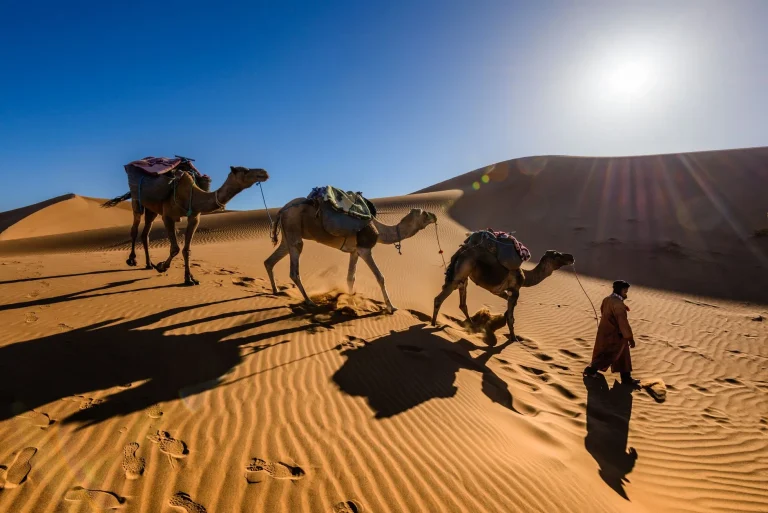
The Sahara is not a Marrakech day trip
If Erg Chebbi is important, give the south several days. The route through the Atlas, Aït Benhaddou, oasis country and Todra is part of the experience.
A rushed desert trip may be cheaper, but it can mean more time in a vehicle than in the places you crossed the country to see.
Moroccan breakfasts can be bigger than expected
Riad breakfasts often include bread, pancakes, jams, eggs, olives, fruit and tea or coffee. If you know lunch will be late, eat properly in the morning.
Do not assume every accommodation starts breakfast early enough for a dawn departure. Ask the night before if you have a train, flight or excursion.
Street food is not automatically risky, and restaurants are not automatically safe
Look for turnover, food cooked hot in front of you and clean handling. Busy stalls can be excellent; empty tourist restaurants can be poor.
The Moroccan street food guide explains what to try and what to check before ordering.
Friday changes the rhythm
Friday is important in the weekly religious and family rhythm. Many businesses still operate, especially in tourist areas, but some schedules and local routines can change around prayer and family meals.
Do not assume the country shuts down; simply expect a different pace in some places.
Ramadan changes timing more than it stops travel
Ramadan dates move each year. Tourist hotels and many restaurants continue to operate, but daytime rhythm, opening hours and evening activity can change significantly.
If you travel during Ramadan, check current arrangements close to departure rather than relying on last year’s information.
Dress is about context, not fear
Morocco is varied. Resort beaches, modern Casablanca, rural villages and conservative medina neighbourhoods do not have identical social expectations.
Dress comfortably but read the setting. Our what to wear in Morocco guide gives a practical framework for cities, coast and countryside.
Photographing a building is different from photographing a person
Ask before taking close photographs of people, workers or children. A colourful market does not make everyone inside it part of your content.
In heavily photographed towns such as Chefchaouen, remember that many of the most attractive doors are private homes.
Not every offer of help is a scam
Tourist districts do have persistent selling and unofficial guiding, but treating every friendly interaction as suspicious makes travel unpleasant.
Use a simple distinction: if you requested a service, agree the price; if someone imposes a service you did not ask for, decline clearly and keep moving.
“Free” guidance often becomes paid guidance
If someone starts walking you somewhere, decide immediately whether you want help. If you do, agree on the price. If you do not, say no before the interaction turns into an argument about payment.
Licensed guides cost money but give you accountability and context.
Riad stairs are real
Traditional buildings often have steep stairs and no lift. A rooftop terrace may mean several flights every time you return to the room.
If mobility, knees or luggage are concerns, ask the floor before confirming the booking. Beautiful architecture is not a substitute for practical access.
Sound travels through a courtyard
Many riads are inward-facing. That is part of their beauty, but it also means breakfast, conversations and doors can echo.
Light sleepers should ask for a quieter room and not assume a small boutique property will be quieter than a modern hotel.
The Atlantic is colder and stronger than many visitors expect
Essaouira, Taghazout and Legzira can look like simple beach destinations in photographs, but wind, swell and currents matter.
Choose the coast for the activity you want. Our Morocco beaches guide compares swimming, surf, families and wind.
Spring and autumn are popular for a reason
They make it easier to combine cities, mountains and the south without the strongest summer heat or coldest winter nights.
There is still no perfect month for the entire country. Check the month-by-month Morocco guide before fixing a multi-region itinerary.
Your phone should not hold the only copy of everything
Keep key hotel addresses, transport confirmations and passport copies somewhere accessible if the phone is lost or the battery dies.
If two people are travelling together, keep the essential bookings on both devices.
French helps, but you can travel without it
French is useful in many practical situations, while Spanish can help in parts of the north. Basic Darija greetings are appreciated and often change the tone of an interaction.
You do not need fluency. A greeting, thank-you and polite refusal are more useful than memorising a long phrasebook.
Public affection and alcohol require context
Tourist hotels, resorts and modern districts are different from conservative neighbourhoods and rural areas. Use common sense rather than anxiety.
Alcohol is available in licensed hotels, bars and some restaurants, but not everywhere. Do not assume every neighbourhood has the same options.
Budget for convenience, not only attractions
The expenses that improve a first trip are often transfers, a good guide, a better-located room or an extra night — not another ticket.
See our Morocco budget guide for the categories that actually change total trip cost.
Leave one free half-day
Your first Morocco trip will produce something you did not plan: a shop you want to revisit, a lunch that takes longer, a neighbourhood you want to walk again.
Leave space for it. The country becomes easier when the itinerary stops trying to control every hour.
Final advice
The things nobody tells you about Morocco are mostly small operational details, not reasons to worry. Once you understand medina access, transport, money, social context and realistic distances, the country becomes much simpler to travel.
Leave a comment