
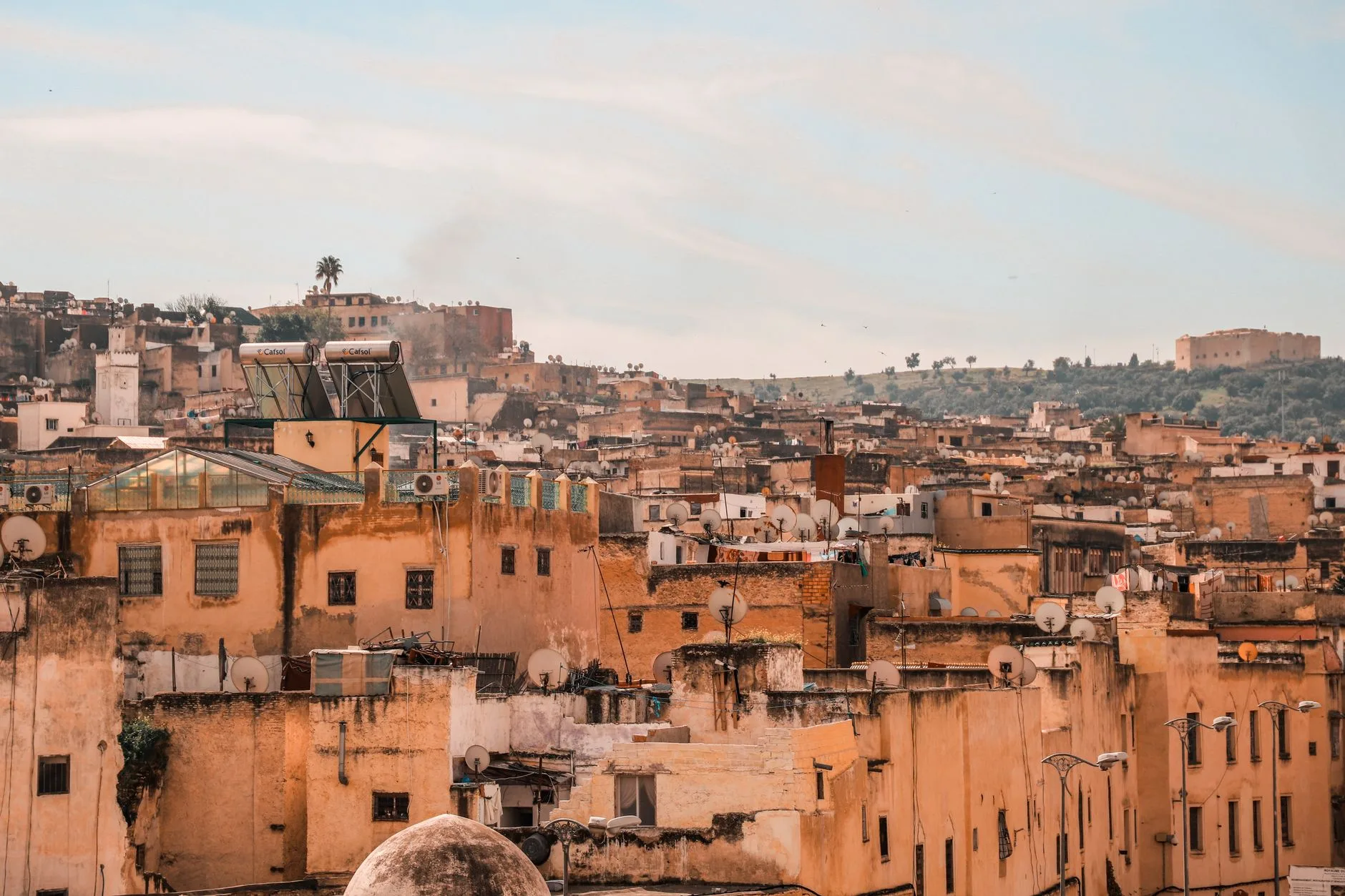
Rooftops are not a restaurant gimmick in Morocco. Traditional urban houses use terraces because dense medinas have limited street-level space and because roofs catch light and air above narrow lanes. Modern cafés and restaurants have turned that practical architecture into one of the country’s signature dining experiences.
The important distinction is between a good rooftop and a good restaurant that happens to be on a roof. The best places do both: a view worth arriving early for and food you would still order at street level.
Best rooftop cities
Marrakech: the classic rooftop city
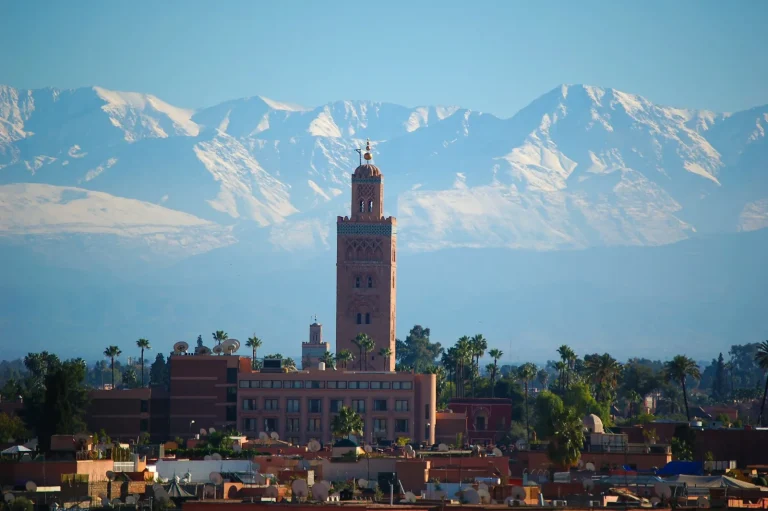
Marrakech has the deepest rooftop scene because the medina is low-rise and visually open from above. From many terraces you can see minarets, ochre roofs and, on clear days, the Atlas beyond the city.
Nomad and Café des Épices are long-established names around the spice market area, but openings, menus and reservation policies can change. Treat any named venue as a starting point and verify current hours directly before planning an evening around it.
The real planning trick is time. Reserve or arrive before sunset, not at sunset. You want enough light to understand the view before the city changes into evening.
Fès: rooftops above a deeper urban fabric
Fès feels different because the medina is denser, older and more topographically complicated. UNESCO describes the Medina of Fez as a historic city whose architecture developed over more than ten centuries. From a roof, that history appears as layers of tiled roofs, minarets, courtyards and hills rather than one famous skyline.
Café Clock is a well-known terrace stop, but Fès also rewards smaller riad rooftops where the view may be less famous and the atmosphere quieter.
Essaouira: Atlantic air changes the experience
Essaouira’s rooftops combine medina views with ocean weather. The Moroccan National Tourist Office emphasises the city’s ramparts, fishing port, wind and Atlantic setting; those same elements shape rooftop dining.
Taros has long been associated with Place Moulay Hassan and elevated views, but as with every named venue, check current opening, music schedule and reservation conditions. Essaouira is windy enough that a beautiful terrace may feel cold after sunset even in months that are warm inland.
Chefchaouen: terraces over the blue medina
Chefchaouen is less about destination restaurants and more about the visual effect of the town itself. The official tourism office describes the blue medina as one of its defining attractions and the Rif mountains as the city’s natural frame.
A simple terrace with mint tea can be more memorable than a formal dinner. For photography, late afternoon is often better than full darkness because the blue walls still hold colour.
What makes a rooftop worth booking?
The view is specific
“Panoramic rooftop” means very little on its own. Look for a view of something identifiable: Koutoubia and the medina, the Fès roofscape, Essaouira’s ramparts or Chefchaouen’s hillside.
The kitchen is not an afterthought
Menus designed only for tourists often become generic: pizza, pasta, burgers, tagine and sushi all on one page. A shorter menu with a clear style is usually a better sign.
There is a weather plan
Good rooftops have shade in summer and some protection from wind or cold in winter. Ask whether your reservation is guaranteed outdoors or may move inside.
Sunset seating is managed
The best tables are limited. Some restaurants reserve terrace tables only for diners; others allow drinks. Clarify before arriving.
Planning the evening
Best time of year for rooftop dining
Spring and autumn are easiest in Marrakech and Fès. Summer evenings can be pleasant after extreme daytime heat, but rooftops without shade can be punishing before sunset. Winter afternoons are often beautiful, while evenings require layers.
Essaouira behaves differently because Atlantic wind moderates heat and can make evenings cool year-round.
What to order
For a first rooftop dinner, choose food that matches the region rather than the view. Marrakech suits tanjia, tagines and modern Moroccan cooking. Fès is the place to look for pastilla and more elaborate Fassi cuisine. Essaouira naturally points toward fish and seafood.
The Moroccan National Tourist Office describes national gastronomy as a mixture of Amazigh, Arab-Andalusian and Jewish traditions. A rooftop menu that expresses where you are is more interesting than an international menu designed to please everyone.
Alcohol
Alcohol availability varies greatly. Some hotels and licensed restaurants serve it; many medina rooftops do not. Never assume cocktails or wine are available because a terrace looks upscale. Check before booking if it matters to you.
Reservations and dress
Smart-casual is usually enough for upscale rooftops. For very popular sunset slots, reserve ahead, especially on weekends and during peak spring and autumn periods. Smaller cafés often work better without a booking.
A rooftop dinner should not replace the street
One of the easiest mistakes in Morocco is spending every evening above the medina and never eating inside it. Use the rooftop for one perspective, then spend another night at street level where the noise, grills, markets and small restaurants tell a completely different story.
Final advice
Choose the rooftop for the combination of food, orientation and timing — not because an Instagram list called it “the best”. Verify the venue before you go, arrive while there is still daylight, and remember that the most memorable terrace may be the simple one attached to your own riad.
How to judge the rooftop itself
How to compare two rooftops before booking
Ignore the marketing adjective “panoramic” and compare five practical things: what the terrace actually faces, whether the sunset is visible from your table, whether dinner is required for the best level, whether there is an indoor fallback, and whether recent guests mention food quality separately from the view.
A rooftop that faces the wrong direction can be beautiful at noon and disappointing at sunset. A restaurant with a spectacular terrace can also be a poor choice if the kitchen is an afterthought.
Photography without ruining dinner
Arrive early enough to take photographs before the meal. Rooftops become awkward when diners spend sunset standing beside other people’s tables with phones held over plates.
In residential medinas, remember that a panoramic terrace can also overlook private homes. Do not use long lenses to photograph people on neighbouring roofs or inside courtyards without consent.
Accessibility and stairs
Many medina rooftops are reached by narrow staircases and historic buildings may not have lifts. If mobility is an issue, ask the restaurant explicitly how many floors are involved and whether the main dining room is accessible without stairs.
The word “rooftop” says nothing about accessibility. A modern hotel terrace and a four-storey riad terrace are completely different physical environments.
Rooftop or street-level dinner?
If you have only one evening in Marrakech, the rooftop can help you understand the city’s scale before walking through it. If you have several evenings, alternate perspectives: one terrace, one neighbourhood restaurant, one market or street-food night.
For Marrakech specifically, our guide to eating in the medina covers the opposite experience: food at street level, where the city is loudest and closest.
Leave a comment