
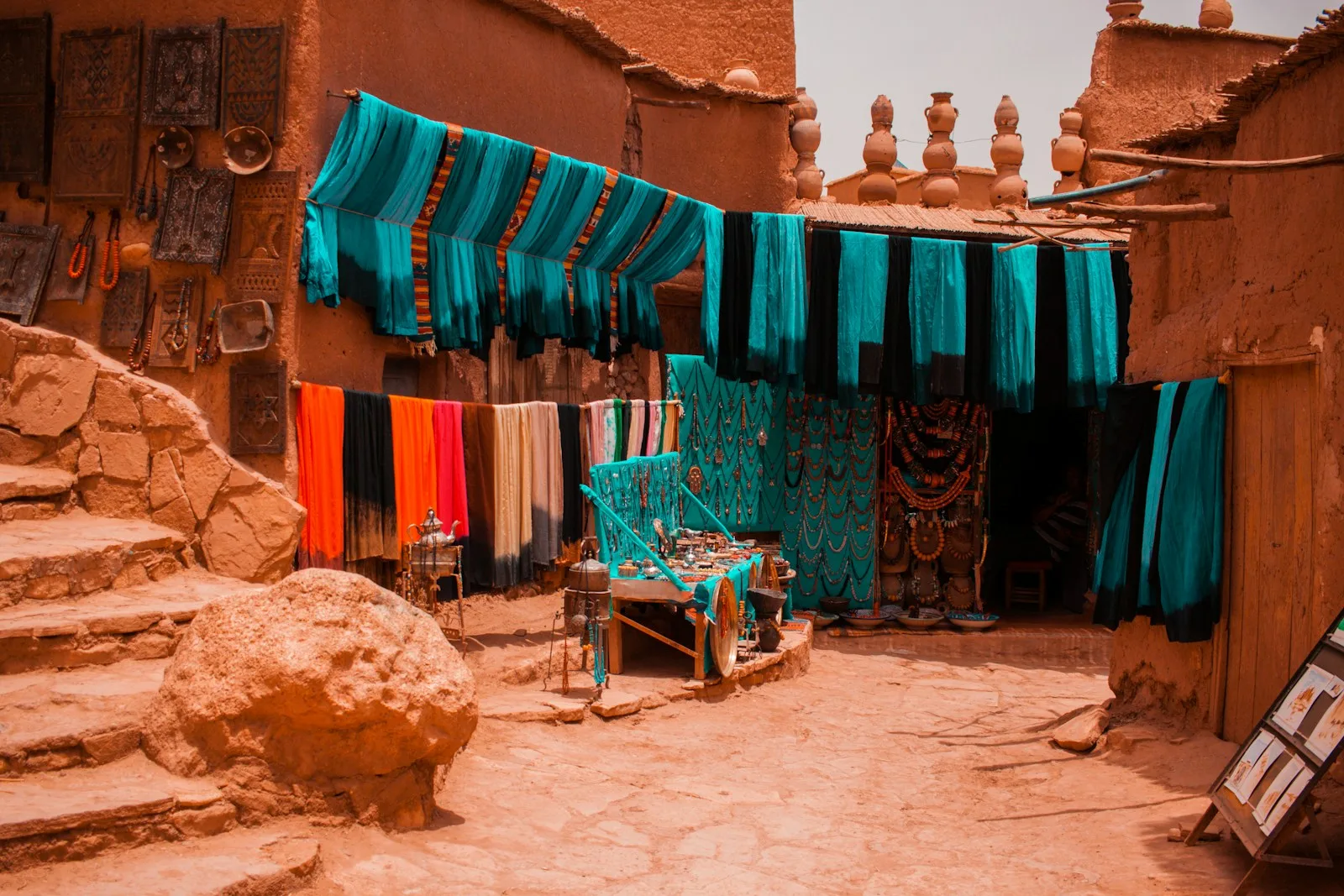
Morocco’s craft tradition is one of the strongest reasons to leave room in your luggage. The Moroccan National Tourist Office highlights carpets, leather, pottery, jewellery, clothing, woodwork and regional food products as important parts of the country’s material culture.
The best souvenir is not the cheapest object in the souk. It is something whose material, origin and use you understand.
11 Moroccan souvenirs worth buying
1. Argan oil
Argan oil is one of Morocco’s signature products and is associated with the southwest. The official tourism office lists both culinary and cosmetic uses.
Check the label, ingredients and packaging. Culinary argan oil and cosmetic argan oil are not interchangeable products simply because both say “argan”. Buy from a producer, cooperative or retailer able to explain what you are getting.
2. Leather babouches
Babouches are light traditional slippers sold throughout the country. Quality varies from decorative souvenir versions to well-finished leather pairs.
Check stitching, sole attachment and whether both shoes are actually the same size. Leather smell alone is not a quality test.
3. Zellige or ceramic pieces
Moroccan geometric tilework is closely associated with Fès and historic architecture. Individual tiles, small trays or objects inspired by zellige can travel more easily than large panels.
Remember that heavy ceramics increase luggage weight quickly. Pack fragile pieces in the centre of a suitcase surrounded by clothing.
4. Handwoven rugs and blankets
Rugs are among Morocco’s most visible crafts, but labels such as “Berber”, “Beni Ourain” or “vintage” are often used very loosely in tourist markets.
Ask where the piece was made, what fibre it uses and whether dyes are natural or synthetic. Buy because you like the object, not because a seller presents it as an investment.
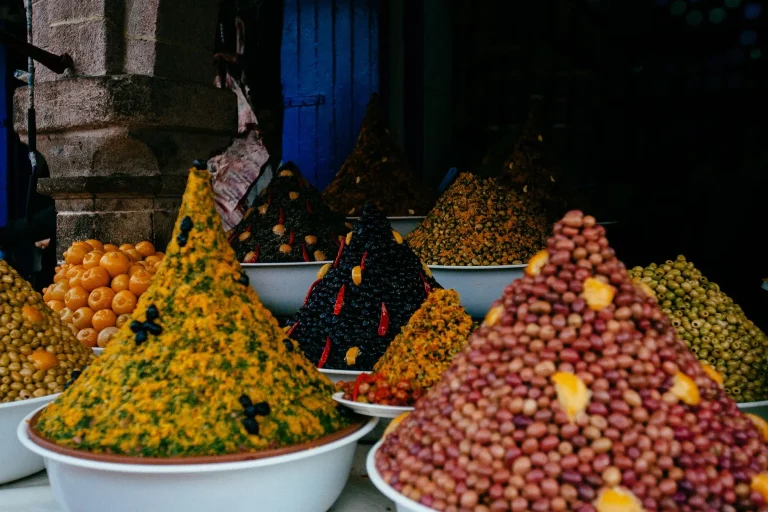
5. Ras el hanout and spices
Ras el hanout means roughly “top of the shop” and recipes vary by merchant and region. There is no universal correct number of spices.
Buy small quantities from a busy, clean shop and choose spices you will realistically use. Saffron deserves extra care because quality varies and substitutes exist.
6. Silver jewellery
Southern Morocco and Amazigh craft traditions are strongly associated with distinctive jewellery forms. If a piece is sold as silver, ask about purity and whether it carries any hallmark or documentation.
Decorative metal sold as “old Berber silver” should be treated as a design purchase unless provenance is credible.
7. Thuya wood from Essaouira
Essaouira is associated with thuya woodworking, including boxes, small furniture and decorative objects. Good pieces show careful joinery and polished grain rather than only a strong scent.
For larger or high-value objects, ask about the wood source and shipping documentation before buying.
8. Tea glasses and metalware
Tea glasses, trays and teapots are practical souvenirs because they connect directly to a daily Moroccan ritual. Check whether decoration is painted, etched or applied and whether the item is intended for actual food use.
9. Pottery from Safi or Fès
The Moroccan tourism office specifically highlights clay and pottery traditions associated with cities including Safi, Fès and Zagora. Regional styles differ, so buying near the place of production adds meaning.
If you intend to eat from the pottery, ask whether the glaze is food-safe rather than assuming every decorative piece is suitable for serving food.
10. Amlou and regional food products
Amlou combines ingredients strongly associated with the southwest, often including argan oil, almonds and honey. It travels better when factory- or producer-sealed.
Check your home country’s customs rules before packing food products.
11. A well-made leather bag
Moroccan leatherwork ranges from simple market bags to beautifully constructed pieces. Inspect zips, lining, stitching, strap attachment and edge finishing.
Do not confuse aggressive bargaining with expert buying. A very low price can simply mean lower-grade construction.
Where craft traditions are strongest
Fès is an important centre for leather, ceramics, metalwork and intricate architectural craft. Safi is strongly associated with pottery. Essaouira is known for thuya wood. Tiznit and southern regions are associated with jewellery. Carpet traditions vary across the Atlas and other regions.
How to bargain without making it miserable
Negotiation is common in many souk settings, but not every shop expects the same process. Start only if you genuinely want the object. Ask the price, make a reasonable counter-offer and walk away politely if you cannot agree.
Do not spend twenty minutes bargaining over an object you never intended to buy.
Cooperatives: useful, but verify the claim
The word “cooperative” can describe a genuine producer organisation, but it can also appear in tourism marketing. Ask who owns the operation, where the product is made and how members are paid if ethical purchasing is part of your decision.
Customs and protected materials
Be cautious with antiques, fossils, wildlife products and anything claimed to be culturally or archaeologically important. Export rules and destination-country import rules may apply. For expensive or unusual items, ask for documentation and check current customs requirements.
Final advice
The best Moroccan souvenir is the one you can explain when you get home: who made it, what it is made from, where the tradition comes from and why you chose that particular piece. That story is worth more than a suitcase full of generic market objects.
How to buy well
How to judge quality before bargaining
For textiles, inspect both sides, edges and finishing. For leather, look at stitching, lining and hardware. For pottery, check for chips, cracks and whether the piece is intended for food use. For metalwork, look at joins and symmetry rather than only shine.
The point is to decide whether you want the object before negotiating. Bargaining cannot turn poor construction into good value.
Large purchases and shipping
Rugs, furniture and large ceramics may be offered with international shipping. Get the total price, shipping method, insurance, expected customs handling and seller contact details in writing before paying.
Photograph the exact item being packed. For a high-value purchase, retain the invoice and any provenance or material documentation supplied by the seller.
Antiques versus “antique style”
Tourist markets use words such as antique, vintage and old very freely. Unless provenance is documented, buy the object for its design rather than for a story about its age.
Items that may have archaeological, historic, wildlife or protected-material significance deserve extra caution because export or import restrictions can apply.
Food souvenirs
Sealed products are easier to transport than open market food. Check your destination country’s rules for honey, oils, nuts, spices and other foodstuffs before packing them.
For liquids such as argan oil, remember airline baggage rules as well as customs rules.
A better souvenir budget
Set aside money for one or two excellent objects instead of many cheap items. Morocco’s strongest crafts reward attention: a rug you understand, a ceramic piece from a known workshop, a leather bag with good construction or food products you will actually use.
For more context on where traditions are strongest, pair shopping with the places themselves rather than treating the souk as a universal catalogue.
Continue planning
Craft shopping is especially meaningful when tied to place: see the Fès medina guide, explore food products through the Moroccan cuisine guide, and compare destinations in 9 Most Beautiful Places in Morocco.
Leave a comment