
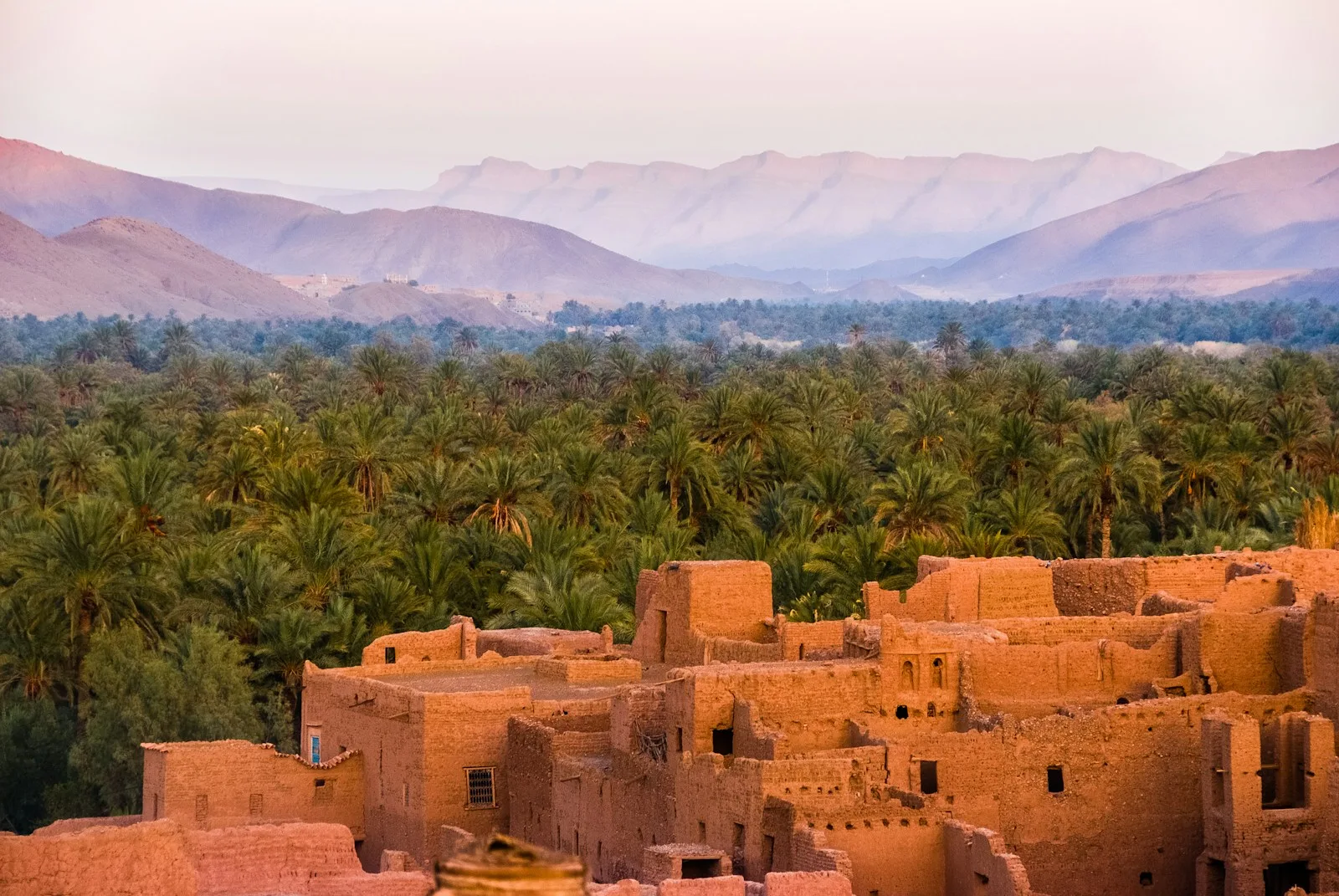
Morocco can work extremely well for families because it offers short, vivid experiences that children understand immediately: markets, boats, beaches, animals, dunes, gardens and food eaten from the centre of the table. The challenge is pace. A route that feels exciting to adults can become exhausting for children if every day includes a long drive and a new hotel.
Best destinations for families
Agadir: the easiest family base
Agadir has the most straightforward family infrastructure of Morocco’s major leisure cities. The Moroccan National Tourist Office describes a long seafront, extensive tourism facilities and the wider Agadir-Taghazout region as one of the country’s principal beach destinations.
That makes it useful for families who want pool, beach, restaurants and simple day trips without navigating a medina every day.
Marrakech: exciting but better in short doses
Marrakech is visually stimulating for children, but the medina can be intense: scooters, crowds, animals, noise and heat all compete for attention.
Plan one major activity in the morning, rest in the middle of the day and return outside later. Gardens, palace courtyards and a riad pool can balance the souks and Jemaa el-Fna.
Essaouira: a good family reset
Essaouira’s compact UNESCO-listed medina, port and beach sit close together. That makes it easier to explore without constant taxis or complicated logistics.
The beach is wide, but Atlantic wind and surf conditions mean parents should follow local safety flags rather than assuming it is always calm swimming water.
Oualidia: slower coastal days
Oualidia’s lagoon setting makes it attractive for families who want a quieter stop. The main value is simplicity: water, seafood, short walks and fewer sightseeing obligations.
As with any natural water environment, conditions vary with tide and weather. Supervision matters even when water appears calm.
The Sahara: magical, but plan the journey
Children often love the dunes, camels and camp atmosphere. The difficult part is not the desert itself but the road required to reach Merzouga.
Break the journey through the Atlas and south rather than forcing a very long transfer. Ask the camp about family tents, private bathrooms, meal times and how long the camel ride lasts. A 4×4 transfer is a perfectly good alternative for younger children or anyone uncomfortable on a camel.
The Atlas Mountains
A mountain day gives families a completely different Morocco from the medina. Choose walks appropriate to the youngest member of the group and use a knowledgeable local guide for longer trails.
Altitude also changes temperature quickly. Carry layers even when Marrakech is warm.
Chefchaouen with children
The blue medina is visually fun and relatively compact, but it is built on slopes. Pushchairs are awkward on steps, so a baby carrier may be more practical for younger children.
Stay overnight rather than squeezing the town into a rushed road day.
Transport: fewer transfers, better trip
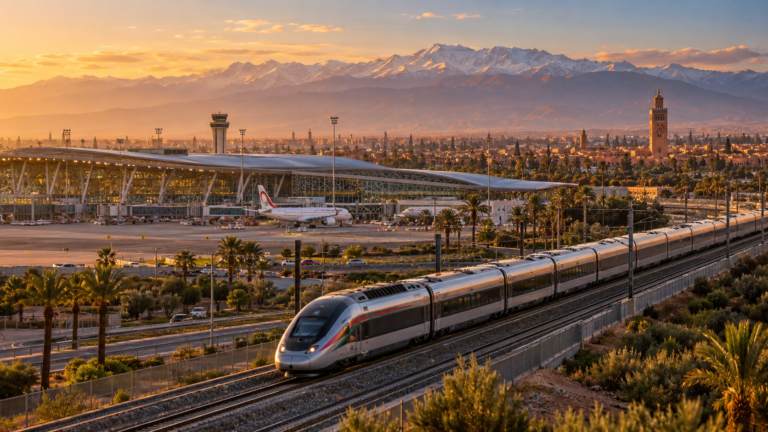
Morocco’s rail network makes journeys between major northern and central cities easier, while many mountain, Atlantic and desert destinations require road transport.
For private drivers, ask specifically about child restraints. Do not assume the seat you need will automatically be available. If a particular standard of child seat is essential, bringing your own may be the most reliable solution.
Health, food and weather
Food with children
Moroccan restaurants are often welcoming to families, but children with allergies or highly selective diets need planning. Bread, grilled meats, eggs, fruit, rice, fries and simple couscous components are usually easy to find.
For allergies, carry the information written in French and Arabic. Official UK travel advice notes that allergen information is not consistently provided and cross-contact can be a concern.
Heat
Inland summer heat can make a normal sightseeing schedule unrealistic for young children. Spring and autumn are easier for mixed city-and-landscape trips. Winter can be excellent in Marrakech and the south during the day, with colder mornings and nights.
Water and food hygiene
Morocco has a national food-safety framework administered by ONSSA, but travel still involves changes in food and water exposure. Use good hand hygiene, choose busy restaurants and keep children hydrated.
Accommodation details that matter
Riads or hotels?
Riads are atmospheric but often have steep stairs, open galleries and pools without the barriers families may expect at a resort. Ask questions before booking.
Hotels are usually easier for very young children because of lifts, larger rooms and more predictable facilities. Older children may find a riad far more memorable.
A realistic 7-day family itinerary
What not to over-schedule
Do not book a cooking class, camel ride, long drive and evening show on the same day. One memorable experience plus free time usually produces a better family holiday than four prepaid activities.
Final advice
The best family Morocco trip uses contrast without exhaustion: city, pool, beach, mountain or desert — but not all at once. Slow the route down, ask detailed accommodation questions and leave enough unscheduled time for children to enjoy the country at their own speed.
Morocco by age group
Morocco with babies and toddlers
The main issues are heat, stairs and transport rather than a lack of welcome. Historic medinas are difficult for large pushchairs, and many riads have open staircases or terraces. A compact stroller plus a carrier gives families more options.
Choose accommodation where naps are realistic. A beautiful riad beside a noisy square may be far less useful than a quieter room with reliable air conditioning or heating.
Morocco with primary-school children
This age often works particularly well for short, concrete experiences: bread-making, a cooking class, a camel or 4×4 excursion, pottery, boats, gardens and markets. Keep explanations short and allow time for ordinary play.
The country does not need to become an educational project. One good story about a kasbah is better than dragging a tired child through six monuments.
Morocco with teenagers
Teenagers may enjoy more independence: surf lessons, photography, food tours, shopping with a budget or a guided mountain walk. Give them some ownership of the itinerary rather than asking them to admire every historic building on command.
Pharmacies, health and insurance
Pharmacies are common in Moroccan cities and can help with minor problems, but parents should bring regular medicines and prescriptions rather than assuming an exact product will be available. Travel insurance should cover the family’s planned activities and medical needs.
For urgent problems, use professional medical care rather than relying on hotel advice alone. Keep insurance contacts and children’s medical information available offline.
Family rooms and connecting rooms
Ask the property to confirm the actual sleeping arrangement. “Family room” can mean one large room, a sofa bed or two rooms with varying levels of connection. In a riad, rooms that appear adjacent in a listing may sit on different galleries or floors.
For young children, ask explicitly about balconies, open galleries, stair gates and pool access.
Continue planning
Families can compare route options in the first-visit guide, beach choices in Morocco’s Best Beaches, and seasonal clothing in What to Wear in Morocco.
Leave a comment