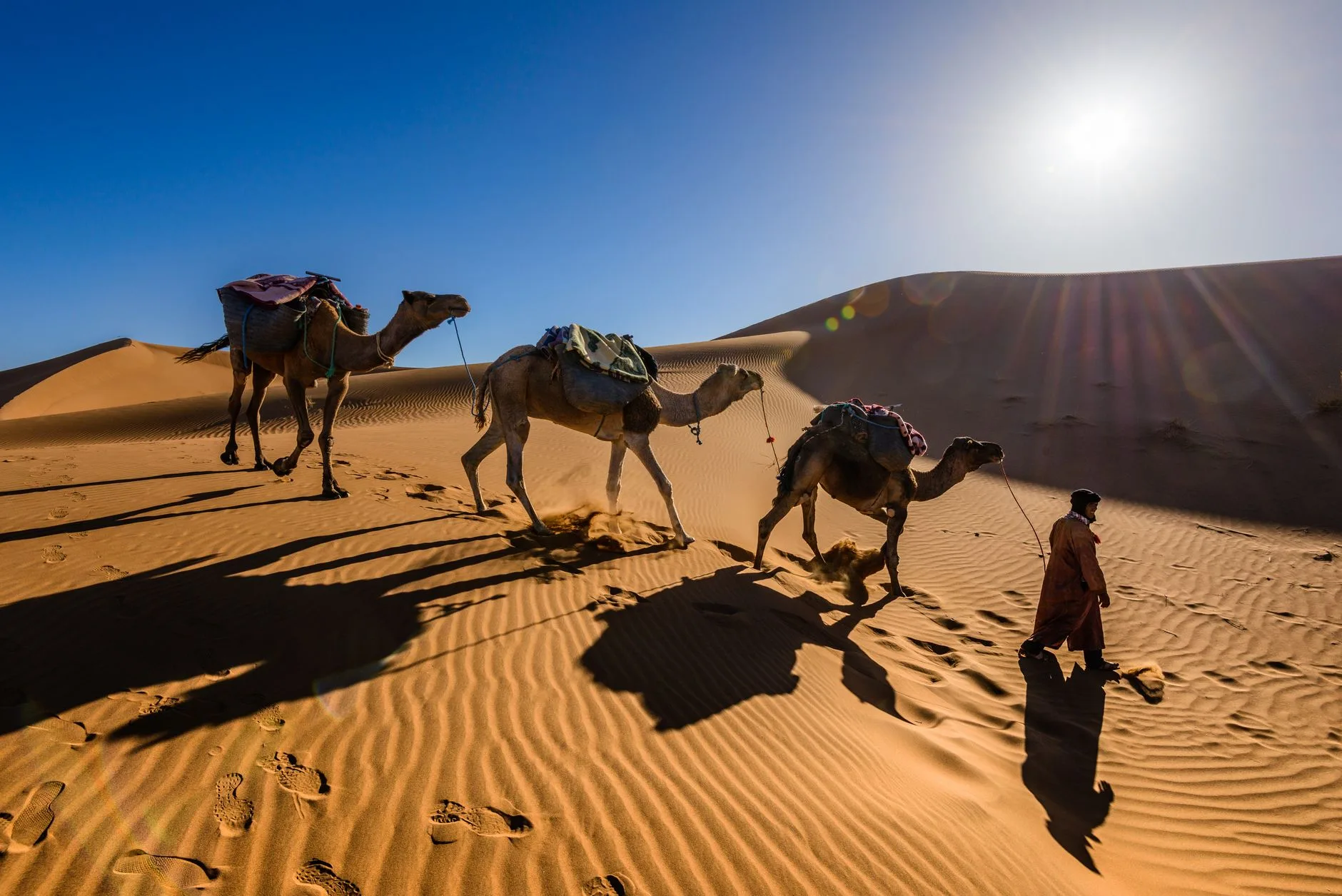
I have slept in very different desert environments, and Erg Chebbi remains one of the places where the basic experience matters more than the label attached to the accommodation. A camp can have a private bathroom, polished furniture and excellent food, but if it is noisy, badly located or crowded, it misses the point of sleeping beside the dunes.
The Moroccan National Tourist Office identifies Merzouga as one of the gateways to the Sahara and highlights camel caravans, bivouacs, dunes and the wider desert ecosystem. That is the right order of priorities: landscape first, camp second.
The camp experience from arrival to sunrise
Arrival: the experience starts before the tent
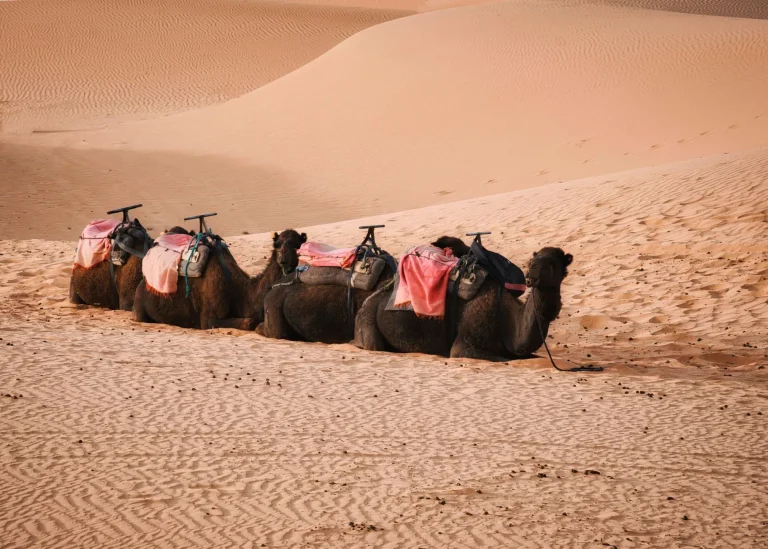
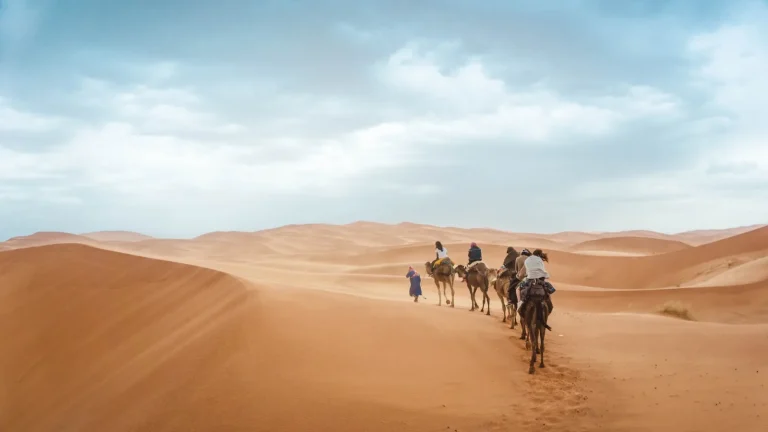
Most camps arrange a meeting point on the edge of the dunes or near Merzouga, followed by a camel ride, 4×4 transfer or sometimes both. Do not assume every arrival works the same way. Ask before booking exactly where you meet, how luggage travels and what happens if you arrive after sunset.
A camel approach at the end of the day is atmospheric, but it is not mandatory. Travellers with back, knee or mobility problems should choose a 4×4 without feeling they have “missed” the desert. The important part is reaching the camp safely and with enough daylight to understand the landscape.
What “luxury camp” actually means
There is no single universal standard behind the term. In practice, the category can range from a comfortable tent with a proper bed to a hotel-style room under canvas with private bathroom, electricity and decorative furniture.
Before booking, confirm the things that actually affect comfort:
- private or shared bathroom;
- hot-water system and whether it works reliably;
- real bed and bedding;
- electricity and charging;
- heating or warm bedding for cold nights;
- ventilation in warmer periods;
- distance between tents;
- how far the camp is from roads and other camps.
The tent
The best tent is not necessarily the biggest one. Privacy, mattress quality, temperature and noise matter more. Desert nights can become surprisingly cold outside summer, while sunny tents heat quickly during the day.
Read recent reviews for practical details rather than compliments about decor. Look for repeated references to hot water, sleep quality, generators, music and cleanliness.
Food
Dinner is usually included in overnight packages. A typical camp meal may include salads, soup, tagine or couscous, bread and dessert. Vegetarian food is normally possible if requested in advance, but travellers with allergies should communicate them clearly before arrival because desert kitchens cannot improvise as easily as city restaurants.
Do not expect fine dining simply because a camp is expensive. The strongest meals are often straightforward Moroccan cooking served hot after the temperature drops.
Music and the question of authenticity
Many camps include evening drumming or Gnawa-influenced music. Enjoy it as part of the hospitality, but be cautious about marketing language that promises an “authentic nomad experience” while running a permanent luxury operation with Wi-Fi and en-suite plumbing.
There is nothing wrong with comfort. It is simply better when the camp is honest about what it is.
The night sky
The sky is one of the main reasons to stay overnight. Moon phase matters: a full moon lights the dunes beautifully but reduces the visibility of faint stars; a new moon produces a darker sky.
Walk away from camp lighting only where it is safe to do so and tell staff before heading out. Dunes are easy to misread in darkness.
Sunrise
Sunrise is often better than sunset for solitude. Set an alarm before first light, take a warm layer and walk to a nearby dune rather than trying to climb the highest point.
The sequence is fast: cool grey, violet, gold, then hard daylight. Be ready before the sun appears.
Planning the stay
How long should you stay?
For most first-time visitors, one night delivers the essential experience. Two nights make sense if you want a slower day, a 4×4 excursion, more walking or time around the oasis. More than two nights should be a deliberate choice rather than an automatic upgrade.
Best season
Spring and autumn are the easiest periods. Winter days can be excellent but nights are cold. Summer heat in the Merzouga region can be severe and changes how much time you actually want to spend outside.
Always check current weather close to departure rather than relying on a generic “best month” list.
Questions to ask before booking
- Where exactly is the camp?
- How many tents are there?
- Is the bathroom private?
- What type of hot water and electricity is used?
- Is music played every night, and until what time?
- How are transfers handled?
- What is included in the rate?
- Are drinks extra?
- Can dietary requirements be handled?
- What happens in bad weather?
What is worth paying for?
Pay for a better location, fewer tents, reliable bedding, private sanitation if you need it and a professional operator. Decorative cushions, elaborate “royal” names and staged photo setups matter much less.
The verdict
A Sahara camp is worth doing if you choose it for the desert rather than for the word “luxury”. The experience becomes memorable when the operation gets out of the way: good arrival, good food, a warm bed, enough privacy and darkness outside.
Responsible desert travel
A camp operates in a fragile environment where water, waste and vehicle traffic matter. Ask how the operator handles water, sewage and rubbish, particularly if the camp markets itself as ecological. Solar lighting is useful, but “eco” should mean more than a few panels beside a permanent high-consumption camp.
Stay on established vehicle tracks where possible and avoid asking drivers to race or climb dunes for entertainment. The desert surface and its vegetation are part of an ecosystem, not an off-road playground.
What to pack for one night
- A warm layer outside summer.
- Sun protection and sunglasses.
- Small overnight bag rather than large luggage.
- Medication and essentials you cannot replace at camp.
- Power bank even if electricity is advertised.
- Closed bag or case for electronics when wind lifts sand.
Camp location matters more than tent decor
Ask the operator to describe where the camp sits in relation to Merzouga, roads and other camps. A beautifully furnished tent beside a noisy access track can deliver less of the desert than a simpler camp in a quieter position.
Satellite maps and recent guest photographs can help you understand density, but remember that camps can move or change. Confirm directly before booking.
Insurance and activities
If your package includes quad biking, sandboarding or other adventure activities, check whether your travel insurance covers them. Operators may provide equipment and instruction without providing the same insurance protections you expect at home.
For the full route, transport and seasonal picture, see our complete Merzouga and Erg Chebbi guide.
Leave a comment