
Founded in the 9th century, Fès el-Bali is the world’s largest car-free urban area and one of the best-preserved medieval cities on earth. With over 9,000 alleys, 14 hammams, hundreds of mosques and a souk for every conceivable trade, it is a place that genuinely rewards days of exploration.
The Chouara Tanneries
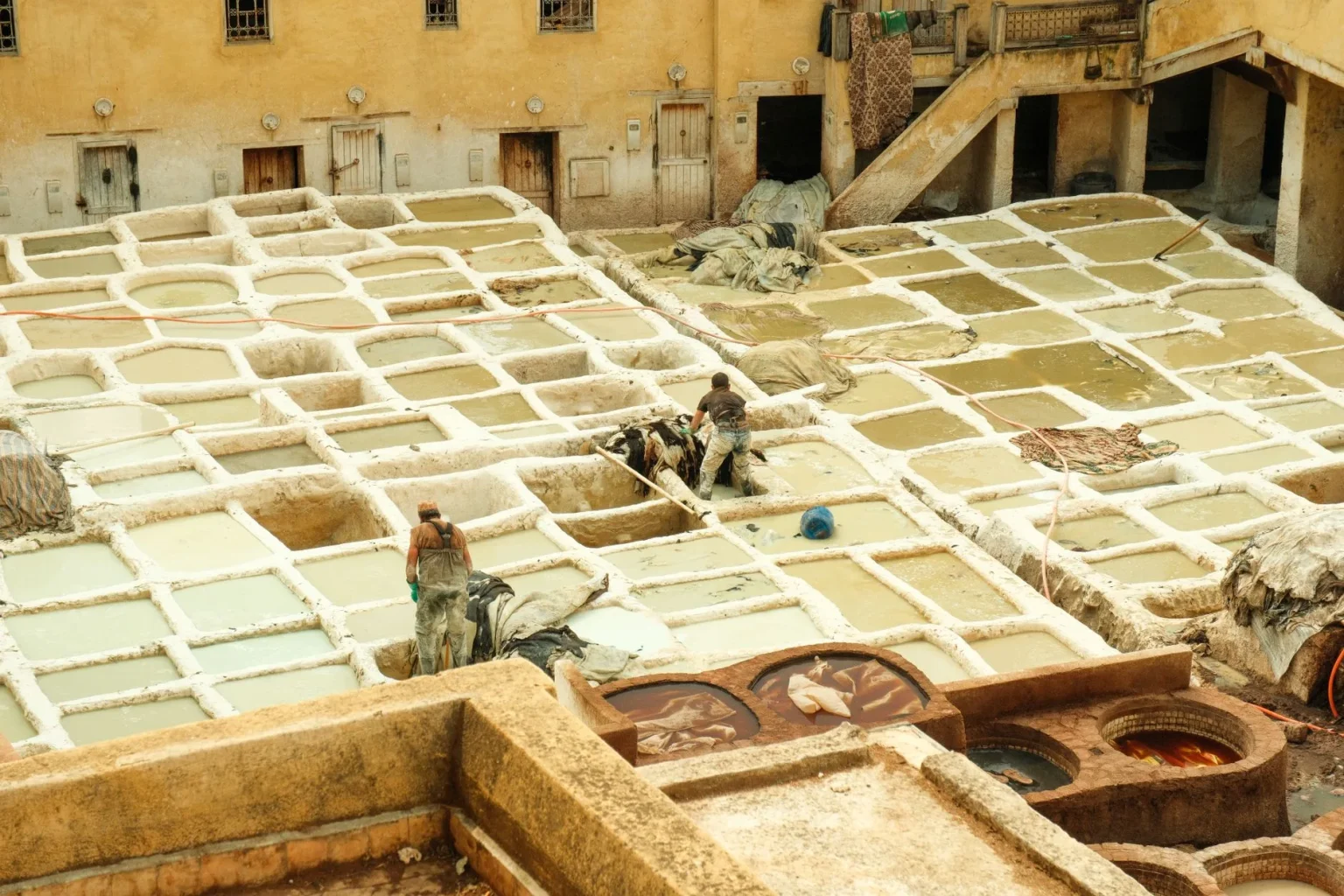
The tanneries of Fès are the city’s most iconic sight — and one of the most extraordinary working industrial sites in the world. Leather has been dyed here in the same circular stone vats using the same natural pigments (poppy for red, indigo for blue, henna for orange, saffron for yellow) since the 11th century. The best views are from the terrace shops above — expect to be handed sprigs of mint to mask the smell.
The Medersas
Bou Inania Medersa and Al-Attarine Medersa are the two finest examples of 14th-century Marinid architecture in Morocco. The carved cedar wood, intricate plasterwork and zellige tilework reach a level of craftsmanship that still seems barely possible. Visit early morning before the crowds arrive.
Getting Around
A guide is genuinely useful in Fès — not because the medina is dangerous, but because the layers of history reward explanation, and getting lost for too long wastes precious time. Official guides are available through the tourist office at Bab Bou Jeloud (the blue gate). Half-day tours cost around 300–400 MAD.
Where to Stay
Stay inside the medina. Riad Fès is the grandest option — a palatial 19th-century house with exceptional food. Dar Seffarine overlooks the ancient metalworkers’ square and is intimate, personal and exceptional value. Book well in advance for both.
