
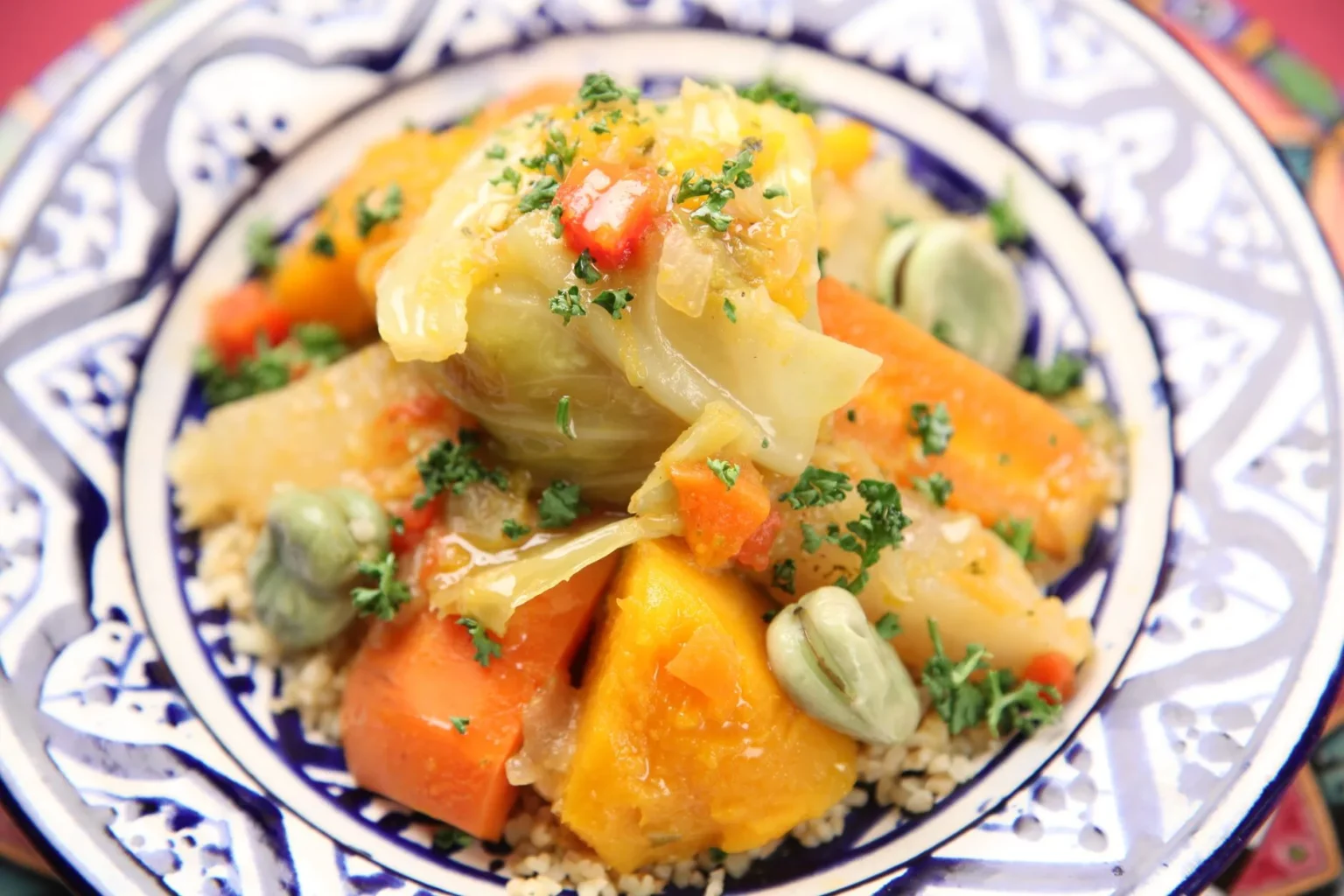

Moroccan food is built on contrast and complexity. Sweet and savoury in the same dish. Heat from harissa, coolness from preserved lemon. The richness of slow-cooked lamb against the brightness of fresh herbs. Understanding these contrasts is the key to understanding Morocco’s extraordinary culinary tradition.
The North: Tangier and Tetouan
The cooking of northern Morocco shows strong Andalusian influence — more olive oil, more herbs, more fish. Bastilla de poisson (seafood pastilla) appears on menus here rather than pigeon. The fresh herb sauces are lighter and more Mediterranean in character than the richer southern preparations.
Fès: The Imperial Kitchen
Fassi cuisine is considered Morocco’s most refined. The city’s Jewish heritage contributed preserved techniques and flavour combinations that persist today. Pastilla with its sweet-savoury alchemy is a Fassi invention. The tagines here use more spice and more complexity than those of Marrakech.
Marrakech: The Spice Road
Marrakech sits at the historical crossroads of Saharan trade routes. Spices from sub-Saharan Africa — black pepper, ginger, turmeric, cinnamon — arrived here first and remain central to the city’s cooking. The tanjia is unique to Marrakech: a jar of lamb, preserved lemon, cumin and saffron slow-cooked in the embers of a hammam furnace for six hours.
The Coast: Argan and Seafood
The Atlantic coast from Agadir to Essaouira runs through argan territory — the only place on earth where the argan tree grows. Argan oil in its culinary form (darker, nuttier than the cosmetic version) appears in everything from salad dressings to the famous amlou dip. Combined with the fresh Atlantic fish, this creates a coastal cuisine of remarkable purity.
The Desert: Date and Spice
In the south and the Saharan regions, dates are incorporated into savoury cooking in ways that surprise first-time visitors. Lamb tagine with dates and almonds is the signature dish of the Drâa Valley — a dish that perfectly captures the generosity and complexity of Moroccan food at its best.
