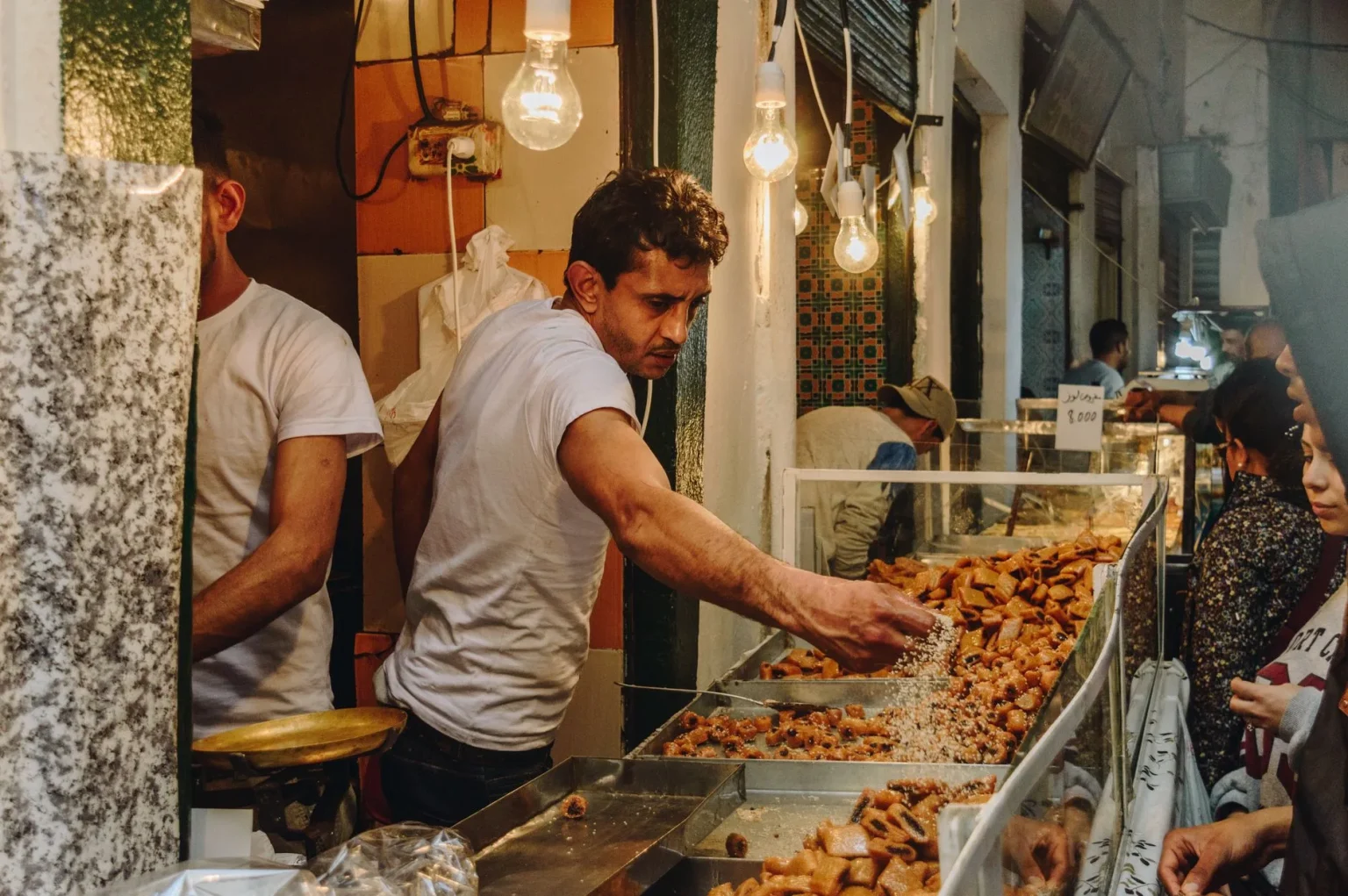

Morocco is one of the great street food nations of the world. You don’t need a restaurant reservation or a sophisticated palate — you just need to follow your nose through any medina, at any time of day, and something extraordinary will find you.
Jemaa el-Fna: The World’s Greatest Food Square
As dusk falls over Marrakech, Jemaa el-Fna transforms into the most theatrical food market on earth. Dozens of stalls materialise, their smoke rising into the darkening sky, hawkers calling out in French, Arabic and English. The spectacle is overwhelming — but the food is the thing.
Order harira (the thick tomato and lentil soup), merguez (spiced lamb sausages), kefta brochettes, fried calamari, snail soup (not for the faint-hearted) and finish with a paper cone of fresh orange juice. Budget 60–100 MAD for a full meal.
Fès: The Street Food Capital
Fès has an argument for being Morocco’s finest street food city. In the Bou Jeloud area near the blue gate, stalls sell msemen (layered flatbread) with honey and amlou (argan oil and almond paste) for breakfast. The kissaria market sells bstilla by the slice — Morocco’s extraordinary sweet-savoury pigeon pie — for a few dirhams.
What to Eat and Where
In Chefchaouen, look for majoun (a sweet walnut and dried fruit confection) and fresh goat cheese from Rif Mountain farms. In Essaouira, buy amlou — the argan oil, almond and honey dip — directly from cooperatives. In Agadir, the Talborjt neighbourhood has excellent cheap Moroccan restaurants serving tanjia, the slow-cooked meat dish unique to Marrakech.
